
Consumer Law
Defective Products: Filing a Consumer Complaint in India
How to prove a product defect, navigate warranty desks, and file an effective consumer complaint when repair or replacement fails.
A defective product claim succeeds when you can show what you bought, what standard or promise applied, how the product failed, and how the business responded. “It is bad quality” is a feeling. “Compressor failed on day 40; authorised service centre reported manufacturing defect; replacement denied” is a case. This guide focuses on that translation.
Preserve the product and the story
Do not discard the item casually. Keep packaging when useful, photograph serial numbers, damage, error codes, and unboxing if the defect is immediate. For electronics, retain authorised service job sheets—those one-page reports often become your best exhibit. If the company takes the product for repair, get a receipt with complaint description printed, not blank.
- Invoice and warranty card or digital warranty registration
- Advertised specifications versus delivered unit differences
- Service centre job sheets and spare-part invoices
- Repeated failure log with dates
- Refusal emails for replacement or refund
- Expert opinion where the defect is technical and contested
Warranty desks are not the final word
Manufacturers often say “physical damage” or “liquid damage” to deny warranty. Challenge bare conclusions. Ask for findings, photos, and the test basis. Parallel consumer remedies can still apply when goods are defective beyond manipulative fine print—especially for early failures inconsistent with ordinary use.
| Failure pattern | Common defence | Your counter-prep |
|---|---|---|
| DOA / dead on arrival | Transit damage | Unboxing video, seal photos |
| Early functional failure | Misuse | Usage context + service report |
| Repeat repair loops | Parts pending | Job sheet chronology |
| Wrong item delivered | SKU confusion | Listing screenshot + invoice |
Demand letter content for defects
State purchase facts, defect narrative, service history, and a clear choice among repair (with timeline), replacement, or refund. If you already endured multiple failed repairs, say so. Attach job sheets. Give a deadline. Mention consumer commission escalation if ignored.
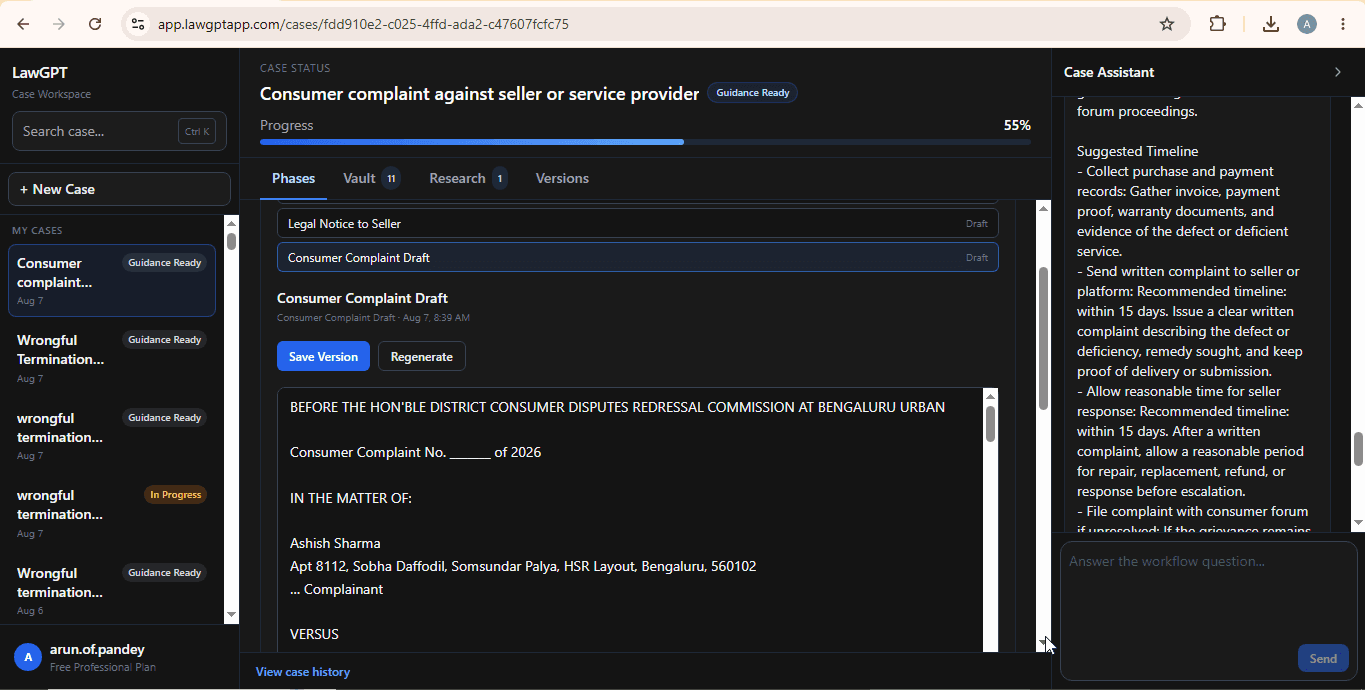
Commission complaints for goods
Plead the defect with particularity. Ask for refund or replacement, compensation for repeated visits if proven, and costs. For safety-related defects, narrate risk carefully without exaggeration. Bring the product or photographs as directed by the commission; follow local practice on inspection.
Defect claim checklist
- Serial number photographed against invoice
- Authorised service opinion on record
- Written denial or unreasonable delay documented
- Parties mapped: seller / manufacturer / platform
- Prayers drafted in the alternative where appropriate
- Annexures indexed before filing
Use /workflows/consumer-complaint to structure defect facts into notice and complaint drafts, and /platform when optional lawyer review is warranted for expensive goods or injury-adjacent facts. Keep education first: prove the defect, then automate the paperwork.
Settlement options that make sense
A replacement of like specification, refund of invoice value, or repair with extended warranty can all be rational outcomes. Distrust vague “credit note for next purchase only” offers if you want out of the product category entirely. Record whatever you accept with serial numbers of the replacement unit.
Manufacturing defect versus user damage narratives
Service centres frequently stamp “customer induced damage” because that phrase ends warranty cost for the company. Your response is evidence: unboxing condition, early failure timing, identical failures reported for the batch if you have reliable sources, and requests for detailed findings. If liquid damage is alleged, ask for photos of the indicators and the testing method. Bare conclusions deserve bare denials backed by requests for disclosure.
If you used third-party repair before authorised service, expect a fight. Some policies void warranty after unauthorised repair. Mention any such repairs honestly and refocus on early manufacturing failure if that is the true story. Honesty about secondary repairs prevents a credibility collapse later.
Replacement loops and lemon-like patterns
Indian consumer disputes often involve three repair attempts with the same recurring fault. Document each visit. After repeated failures, your demand letter should shift from repair to replacement or refund. Continuing to accept endless repairs without protest can be spun as satisfaction. Draw a line in writing: one final repair with a deadline, then refund.
Safety defects need a different speed
- Stop using the product and photograph the hazard
- Seek medical help if injury occurred and preserve reports
- Notify the seller/manufacturer in writing immediately
- Do not wait for ordinary return windows if the risk is ongoing
Safety cases may justify higher compensation and faster escalation. They also require careful, non-exaggerated pleading. Overclaiming injuries invites medical scrutiny; under-documenting real injuries wastes rights.
Used goods, refurbished lines, and “as is” labels
Refurbished products can still support claims when they fail to meet the grade promised or arrive dead. “As is” language does not always legalise deception about core functionality. Keep the listing that said “like new” or “certified refurbished.” The gap between grade promised and unit delivered is your case theory.
Structure defect evidence and prayers in /workflows/consumer-complaint, and seek /platform review for injury-adjacent or high-value appliance disputes where expert evidence may be needed.
Authorised service choreography
Book service with complaint text that matches what you will later plead—“cooling failure,” “battery not charging,” “panel dead on arrival”—not vague slang. Collect job sheets even when the engineer says “it is fine now.” If parts are ordered, get the part name and ETA in writing. If the unit is carried away, get a receipt with serial number. These small papers defeat later claims that you refused service or imagined the defect.
When service centres push extended warranty purchases as the real fix, treat that as a sales move. An extended warranty may be useful after a proper cure; it is not a substitute for acknowledging a manufacturing defect in a new product.
Prayers that fit goods cases
Primary prayers usually include repair within a time, replacement of equivalent goods, or refund of consideration with return of the defective unit. Alternative pleadings are useful: “replace, or failing which refund.” Add compensation only with a short factual basis—multiple service visits, unsafe incident, lost use during a documented period. Then structure the draft in /workflows/consumer-complaint so alternative prayers stay consistent from notice to filing.
Home appliances and installation-linked defects
Many appliance disputes sit between product defect and installation deficiency. If a company-authorised installer damages pipelines or leaves a unit with visible transit dents, preserve the installation job card and photos before they leave. If installation was delayed so long that warranty confusion arises, narrate those dates. Manufacturers sometimes blame electric supply; a stabiliser recommendation should not become an endless excuse for a unit that never worked on day one.
For vehicles and high-value goods, maintain service history books and refusal notes. Ask for technical reports. Consider whether manufacturer escalation desks must be exhausted under warranty terms—and still diary a consumer law clock so exhaustion does not become infinity.
Food, cosmetics, and perishables
Seal photos, batch numbers, purchase bills, and medical reports if adverse reactions occurred all matter. Do not consume the entire item if you plan to complain—retain a sample safely. Notify relevant helplines where appropriate in parallel with consumer remedies, and keep those complaint numbers as annexures of diligence inside your /workflows/consumer-complaint package.
Comparing repair cost economics to refund asks
Sometimes a manufacturer offers repair with long downtime. Price your inconvenience: rental of a substitute appliance, repeated electrician visits, spoiled goods in a failed refrigerator, missed work for service slots. Not every inconvenience is recoverable, but documented consequential costs justify why refund or replacement is more appropriate than a third repair. Present those costs calmly with bills. Economics, not adjectives, move warranty desks and commissions.
Serial-number discipline
Photograph the serial number next to the invoice on day one. Service centres sometimes swap units or dispute identity. If a replacement arrives, photograph the new serial immediately and update your annexure index. If the company collects your defective unit, retain a copy of the receipt with serial and complaint description. Serial discipline sounds petty until a hearing turns on whether the job sheet refers to your machine at all. Include those photos in the /workflows/consumer-complaint upload set beside the job sheets.
Keep spare packaging for high-value items until the dispute ends. Sellers sometimes demand original boxes for replacement eligibility. Photograph packaging condition when the courier collects a return. Box condition fights are petty, predictable, and winnable when you have photos dated to the pickup day.
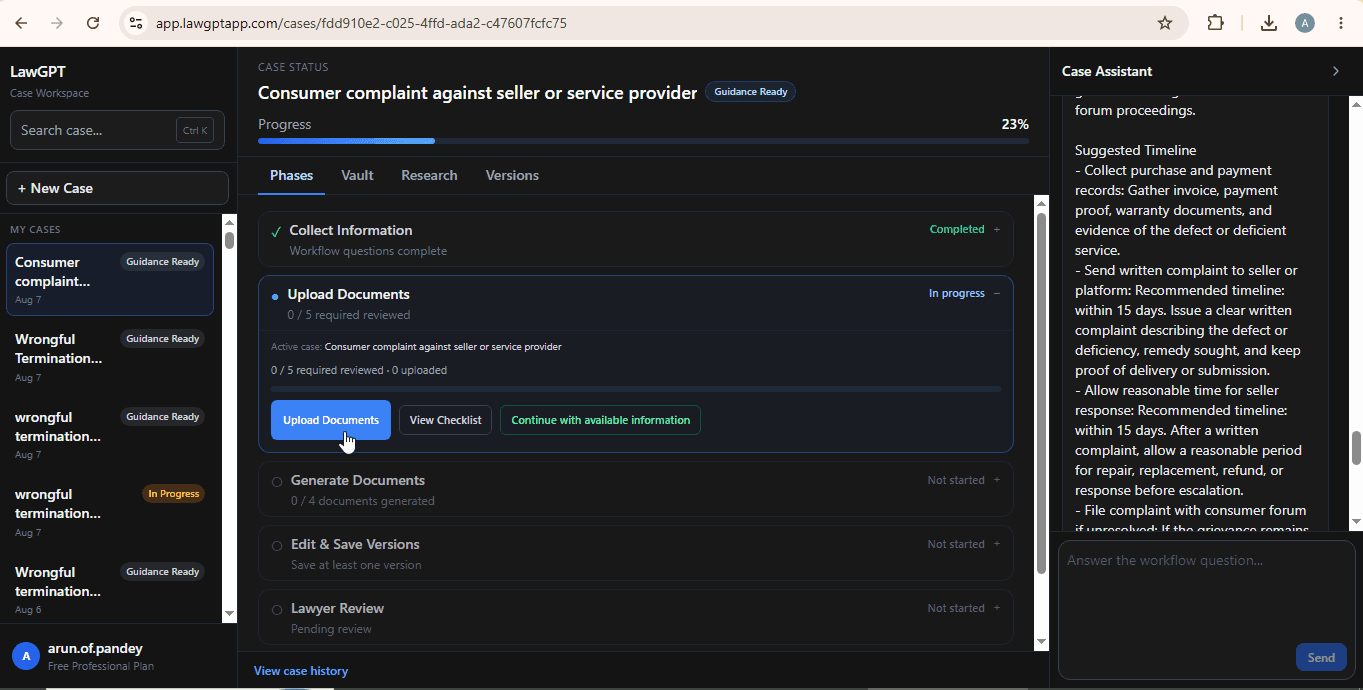
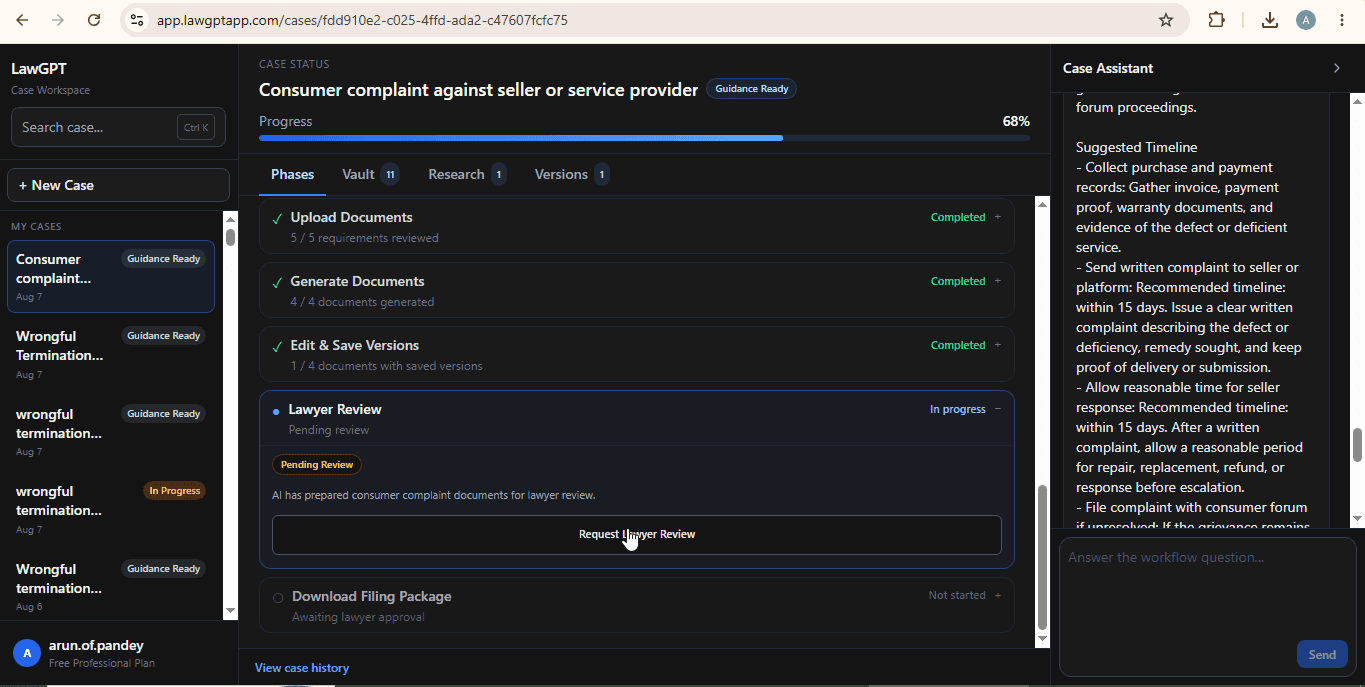
Inside the LawGPT workflow
Frequently asked questions
Warranty expiry weakens contractual warranty claims but does not automatically erase every consumer argument, especially for latent defects or unfair practices. Facts and timing matter; act quickly.