
Consumer Law
Deficiency of Service Explained (India)
What counts as deficiency of service under Indian consumer law, with examples from travel, education, healthcare billing, banking, and home services.
Deficiency of service is the workhorse concept for many Indian consumer cases that are not about a physical product at all. Flights, coaching institutes, hospitals’ non-medical billing fights, banks, insurers, interior designers, broadband providers—these disputes turn on whether the service was imperfect, incomplete, or not as promised. This guide explains how to frame that claim.
The legal idea in plain language
If you hired a service for consideration and the provider performed it inadequately relative to the contract, representations, or applicable standards, you may allege deficiency. It is not a guarantee of perfect outcomes in every professional field—especially medicine and complex advisory work—but it does reach negligent systems, unjustified delays, refusal to perform after taking money, and bait-and-switch packages.
Sector examples that recur
| Sector | Deficiency pattern | Strong exhibits |
|---|---|---|
| Travel / hospitality | Confirmed booking denied | Vouchers, denial emails, alternate spend |
| Education / coaching | Faculty or hours not as advertised | Prospectus, fee receipt, attendance logs |
| Broadband / telecom | Chronic downtime vs plan | Speed tests, ticket IDs, plan brochure |
| Home services | Abandoned renovation mid-way | Scope docs, photos, payment milestones |
| Banking / payments | Unauthorised pull with poor response | Alerts, complaint to bank, freeze letters |
Build the promise → performance gap
Your narrative should quote what was sold: brochure, proposal, SLA, website page, WhatsApp scope, or invoice description. Then show what happened. Then show loss—extra payments, wasted fees, consequential expenses. Without the promise document, deficiency collapses into subjective disappointment.
- Engagement letter, proposal, or booking confirmation
- Marketing claims you relied on
- Proof of full or partial payment
- Complaint tickets and unanswered reminders
- Evidence of actual performance gaps
- Mitigation steps you took to reduce loss
Remedies typically sought
Refund of unused fees, completion of service at no extra cost, compensation for alternate arrangements, and costs are common. For ongoing subscriptions, seek interruption credits and exit without unlawful lock-ins. Be precise—asking for “crores for mental agony” on a small broadband dispute undermines seriousness.
Deficiency claim prep
- Write a one-paragraph standard of service promised
- List each breach with date
- Quantify refundable fees versus compensation
- Send a cure demand with a realistic deadline
- If ignored, draft commission complaint via structured workflow
- Consider sector ombudsman tracks in parallel where useful
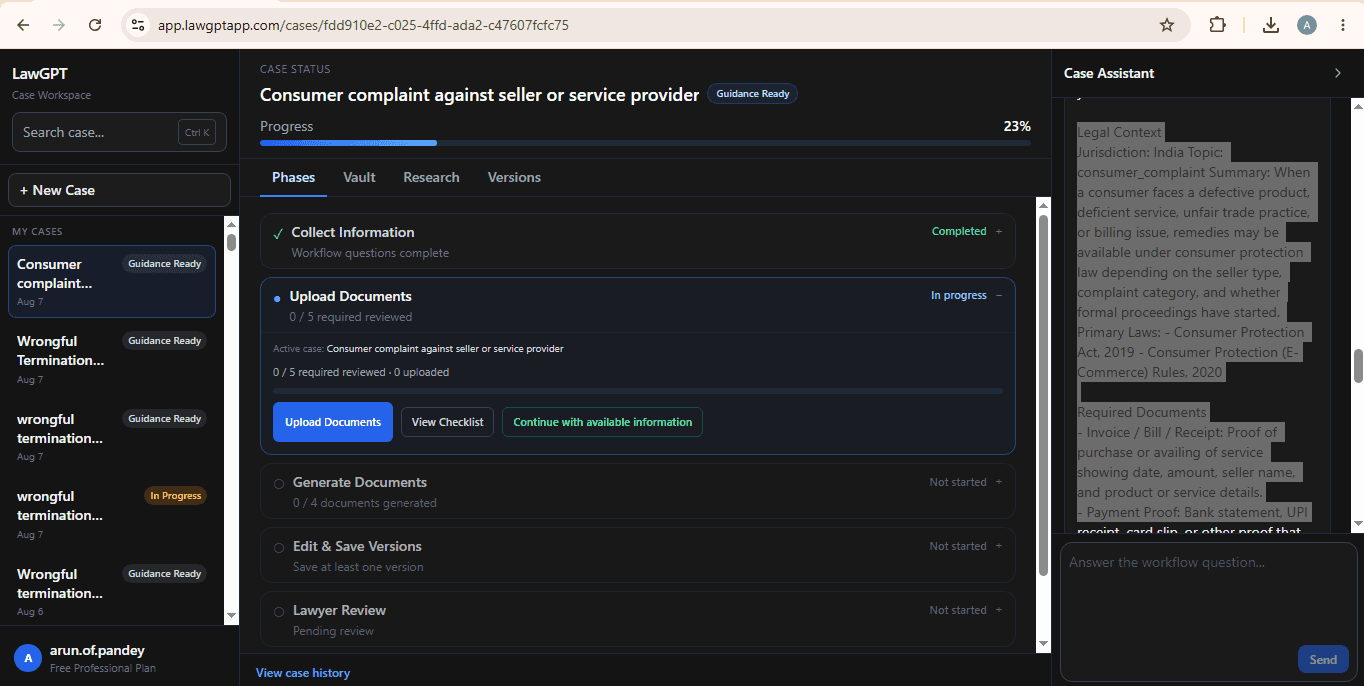
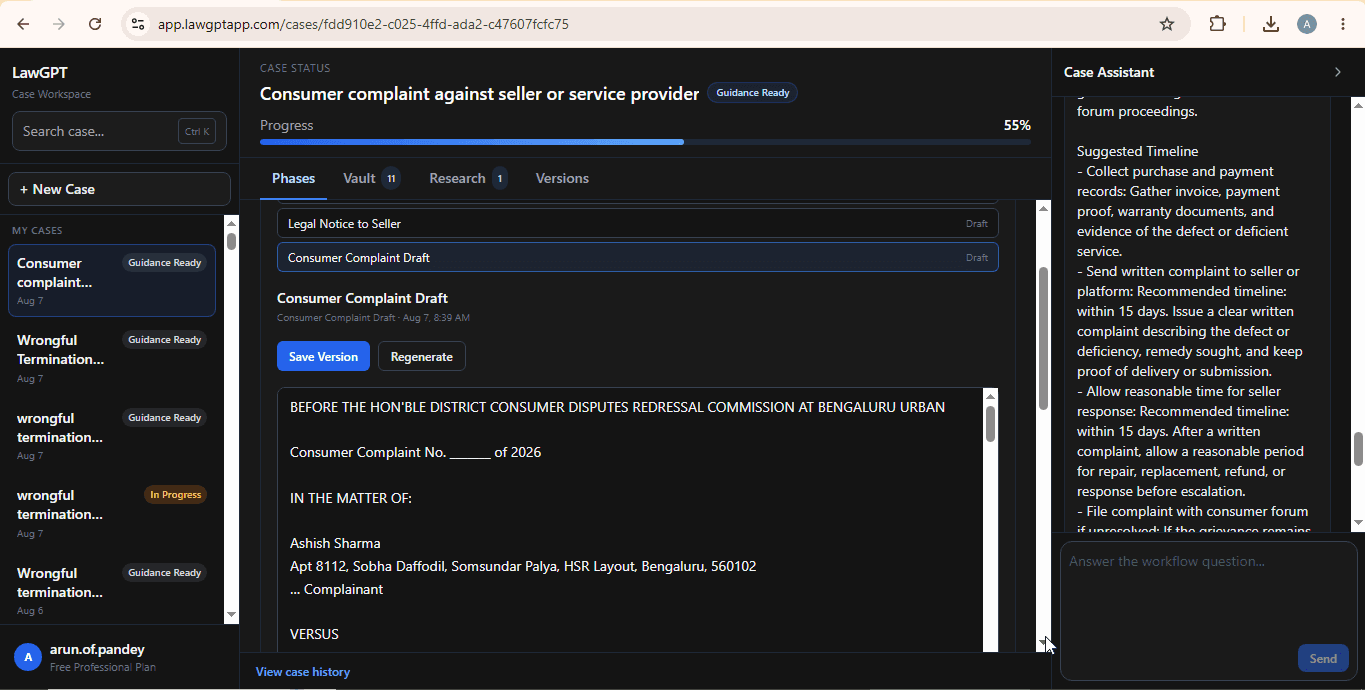
LawGPT’s /workflows/consumer-complaint intake is designed to separate goods defects from service deficiency so your drafts use the right theory. Explore /platform for research context and review when the service provider is a large institution with a legal team ready to exploit vague pleadings.
Settlement dynamics
Service providers often prefer credits, re-performance, or partial refunds over admissions of deficiency. Credits can be acceptable if you still want the relationship; refunds are cleaner when trust is broken. Get any apology-plus-payment deal in writing before you withdraw a complaint.
Distinguishing bad outcomes from deficient processes
A coaching student may not crack an exam even if classes ran as advertised; that alone is not deficiency. If the institute promised a named faculty for 120 hours and delivered 40 hours of recorded sessions by someone else, the gap is pleadable. A hospital billing dispute over unconsented items differs from a medical negligence case about clinical judgment. Name the theory you are actually pursuing and gather exhibits for that theory only.
Process deficiency often looks like: money taken, service stalled, excuses looping, no completion, no refund. Outcome disappointment looks like: service delivered as scoped, results uncertain. Commissions are more comfortable with the first pattern when papers are clear.
Fixed-price projects and change orders
Interior designers, developers of small websites, and event planners often expand scope verbally. If you paid fixed fees for a defined scope, freeze the scope document. Change orders should be written. When the provider abandons the project after partial payment, quantify percentage incomplete with photos or deliverable lists. Your refund ask can be proportional rather than total if some value was received—proportional honesty reads well.
Regulated professional services
- Check whether a specialist forum or regulator also has jurisdiction
- Preserve engagement letters and advice memos carefully
- Avoid publishing privileged or sensitive professional materials
- Consider expert support before alleging professional negligence
Consumer forums have heard cases against various professionals, but maintainability and standard-of-care issues can be complex. Do not paste a product-refund template onto a professional negligence story.
Continuous services and outage credits
Broadband, cloud, and maintenance retainers should be measured against uptime promises or reasonable expectations sold at signup. Keep outage logs and ticket IDs. Ask for credits first; if credits are denied contrary to policy, escalate. For services billed annually with poor performance in month one, argue for exit and refund of unused periods rather than suffering eleven more months.
Frame deficiency with LawGPT at /workflows/consumer-complaint so the promise document and breach log stay aligned. Use /platform when the provider is a large institution that responds with boilerplate denial paragraphs.
Writing the standard of service you were owed
Before you use the word deficiency, draft a 100-word standard: what was booked, by whom, for how much, with what timeline, and what quality signals were given. Then draft a 100-word performance summary: what was delivered, when, and what was missing. Everything else in your case is exhibits for those 200 words. If you cannot write them, keep collecting papers until you can.
This exercise also prevents overpleading. Consumers sometimes throw “negligence, fraud, deficiency, unfair trade practice, mental harassment” into one sentence. Pick the labels your facts support. Precision reads as credibility.
Partial performance and quantum
Where a service is half-complete, compute unpaid milestones and the cost to complete through a replacement provider if you claim consequential loss. Get quotes from alternate providers as annexures if you seek completion costs. Courts and commissions understand mitigation—show you tried to reduce damage rather than maximise drama.
For subscription services, align your cancellation attempts with bank mandate controls. A deficiency claim paired with continued involuntary payments should narrate each pull as a separate dated event after cancellation attempts.
Travel, events, and time-sensitive services
A cancelled banquet hall days before a wedding, a tour operator who swaps hotels to a lower class, or a schedule change that destroys a connection can all support deficiency or unfair practice theories depending on terms and notices given. Mitigate by booking reasonable alternatives and keeping those invoices—mitigation spend often becomes consequential loss. Time-sensitive services justify compressed notice timelines; explain urgency with dates, not adjectives.
Photography and videography packages that deliver late or incomplete galleries should be judged against written deliverables. Keep the contract page listing quantities and delivery days. Subjective taste differs from non-delivery of promised quantity.
Fintech app failures
Failed transfers that debit without credit, KYC loops that lock funds, and mis-sold digital credit products appear increasingly in consumer narratives. Export in-app ledgers, raise gateway disputes, and notify the company grievance officer. Where ombudsman pathways apply, use them with the same chronology you will annex before a commission. Consistency across regulators remains your friend—and LawGPT helps keep that chronology stable at /workflows/consumer-complaint.
Customer duty and mitigation—what forums expect
Consumers must also behave reasonably: provide site access for home services, share required KYC for fintech onboarding, and avoid expanding scope verbally while refusing to pay for change orders. When you allege deficiency, be ready to show your own cooperation. Mitigation—hiring a replacement photographer after a no-show, buying a temporary broadband dongle—demonstrates seriousness and quantifies loss. Forums are not impressed by claimants who refused all cures and then maximised damages narratives.
Refund versus re-performance decisions
Ask yourself whether you still want the provider to finish the work. If trust is broken, prefer refund of unused fees plus documented consequential costs. If trust remains and only a milestone slipped, re-performance with a written deadline can be efficient. State the choice in your notice so the provider cannot claim they did not know which remedy you wanted. Ambiguous demands produce ambiguous offers. Clear demands produce comparable counteroffers you can evaluate against your floor.
Where a provider blames you for delay, ask for the written dependency list they claim you missed. If they never sent requirements, their blame narrative weakens. If you did miss a dependency, cure it quickly and restart the clock in writing. Forums respect claimants who cure their own gaps instead of only cataloguing the other side’s.
Inside the LawGPT workflow
Frequently asked questions
Unjustified or unreasonable delay inconsistent with promises can be. Force majeure claims need scrutiny—ask for specifics rather than accepting a generic ‘circumstances’ email.