
Employment Law
Wrongful Termination Compensation Explained (India)
How employees estimate notice pay, back wages, gratuity, damages, and settlement ranges after an unlawful or disputed termination in India.
Compensation after wrongful termination is not a single lottery number. It is a stack of contractual dues, statutory payments, and—sometimes—discretionary or adjudicated amounts for unfair dismissal. Employees who mix these heads into one emotional figure struggle in negotiation. This guide separates the stack so you can defend every rupee you ask for.
Layer 1: Money already earned
Start with unpaid salary, earned incentives meeting plan criteria, reimbursements with proof, and leave encashment per policy. These are not “compensation for unfairness”; they are debts. Itemise by month. If variable pay was discretionary, gather the historical pattern showing it was regularly paid for similar achievement—patterns often persuade better than adjectives.
Layer 2: Exit-linked contractual amounts
Notice pay or pay in lieu is the headline contractual exit cost when the employer ends employment without serving notice. Some letters also mention severance ex gratia, retention bonuses with clawbacks, or joining-bonus repayment schedules. Read clawbacks carefully—employer breach arguments may affect whether a clawback is enforceable on your facts, and you should not silently accept a deduction you dispute.
| Head | Typical basis | Notes |
|---|---|---|
| Notice pay | Contract or applicable statute | Confirm salary definition |
| Gratuity | Payment of Gratuity Act if eligible | Tenure and wage rules matter |
| Retrenchment compensation | Industrial Disputes Act where applicable | Workman plus retrenchment conditions |
| Back wages | Adjudication in unfair dismissal | Not automatic; fact-dependent |
| Damages | Civil breach claims, often managerial | Must plead and prove loss |
Layer 3: Statutory safety nets
Gratuity may apply after five years’ continuous service, with recognised exceptions and interpretations around completion. PF remittances should already have been deposited—verify via UAN rather than trusting a spreadsheet. Bonus statutes or company bonus policies may create additional claims. Retrenchment compensation formulae under industrial law apply only when that legal pathway is truly triggered by your exit category.
Layer 4: Adjudicated or negotiated extras
In industrial disputes, remedies can include reinstatement with back wages or lump-sum compensation in lieu of reinstatement. Quantum depends on length of service, fault findings, delay, and whether the employee was gainfully employed elsewhere. Managerial civil claims may seek damages for breach—these require proof of loss, not just indignation. Settlement negotiations often price career interruption, stigma wording, and speed of payment.
Tax and structuring
How a settlement is worded can affect tax treatment. Ex gratia, gratuity, and salary arrears are not interchangeable labels. For significant amounts, have a chartered accountant and lawyer align the term sheet. Do not accept vague “special payment” language without understanding TDS and the net amount you will actually receive.
Building a negotiation band
Settlement prep
- Calculate an evidence-backed floor: unpaid plus notice plus statutory
- Set a target that includes a realistic premium for unfairness and speed
- Define a walk-away number before the meeting
- Decide non-money must-haves such as neutral wording and relieving timelines
- Sequence documents and money simultaneously, not money later
- Record the deal in a signed settlement with dates
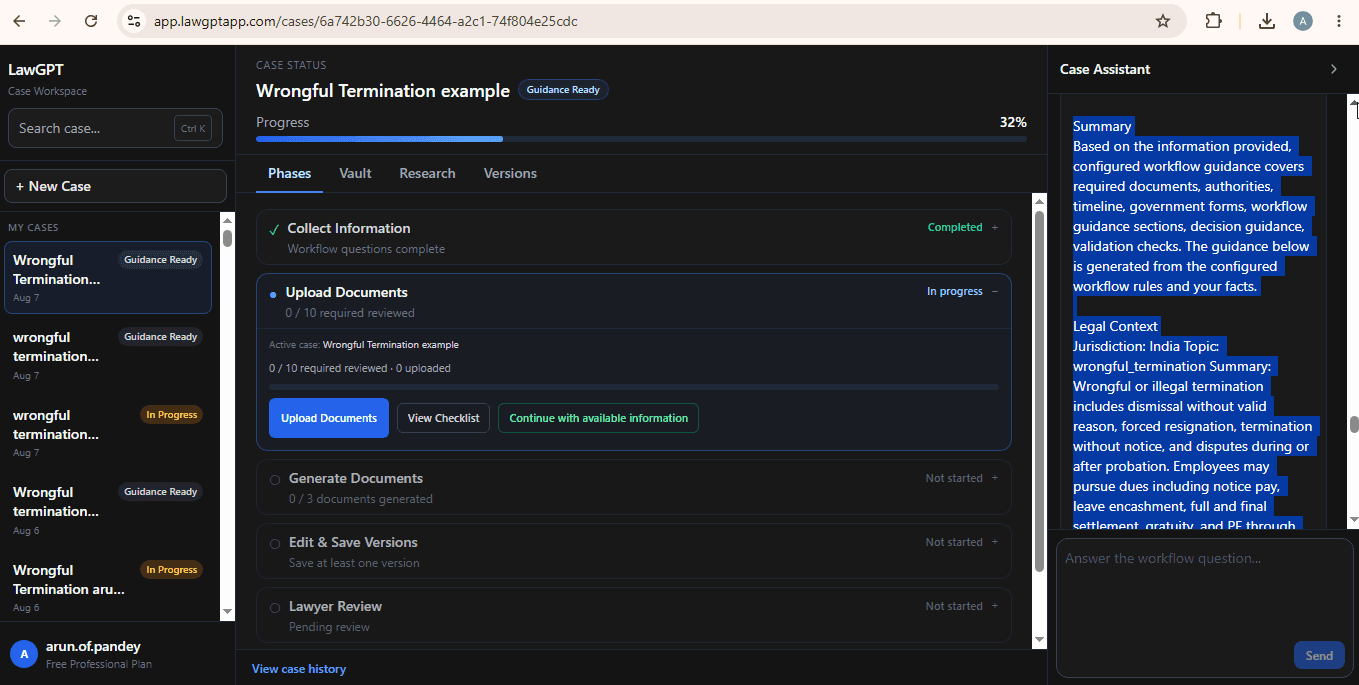
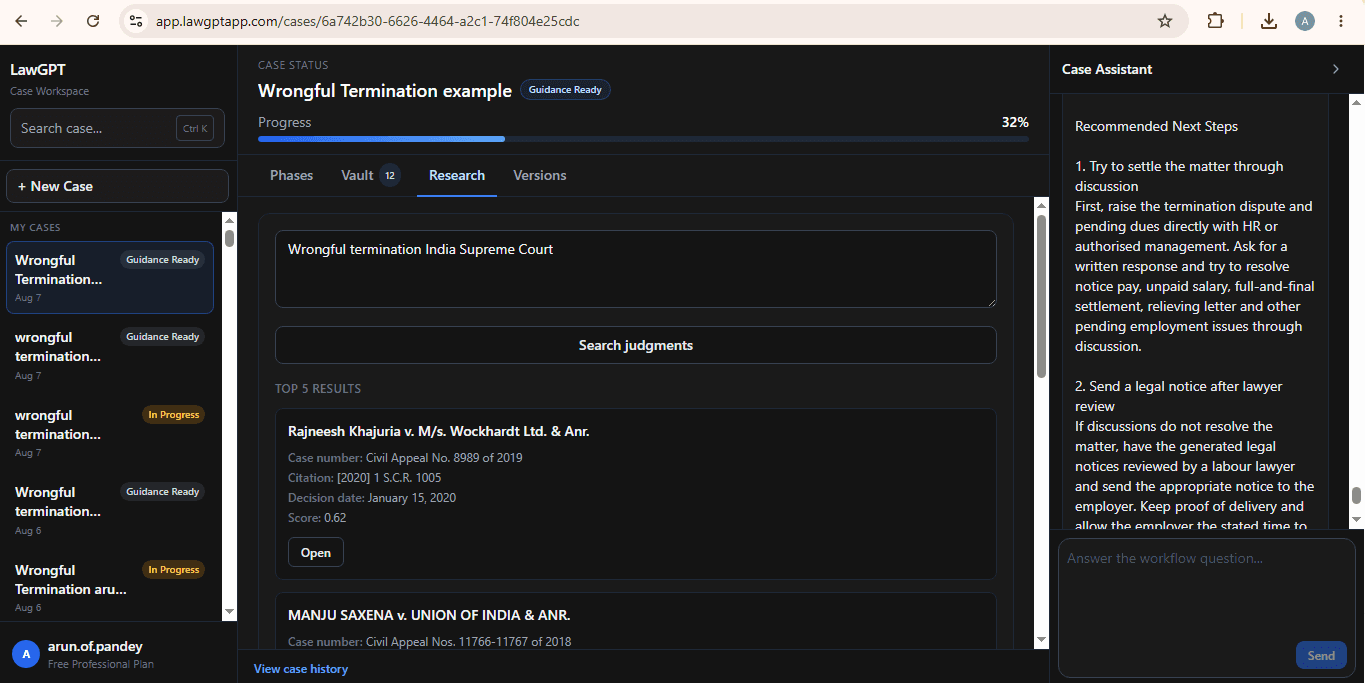
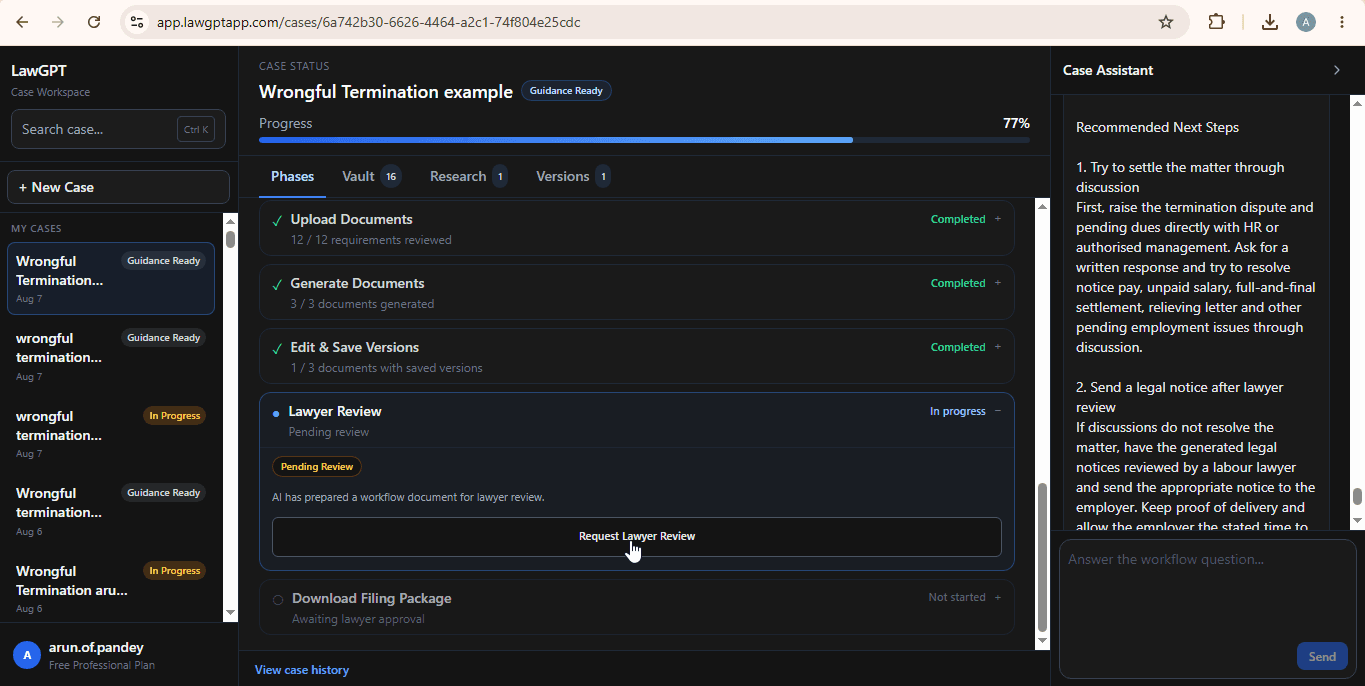
LawGPT’s /workflows/wrongful-termination flow helps you keep compensation heads organised inside the matter file so notices and complaints do not invent new numbers mid-way. Use /platform when you want counsel to stress-test assumptions before you anchor a figure in writing.
What compensation usually is not
Indian employment claims rarely produce US-style punitive mega-awards for ordinary private disputes. Defamation or discrimination angles, where truly present, need careful pleading and evidence. Focus first on collectible dues and credible unfair-dismissal remedies for your forum—then decide whether specialised claims are worth the complexity.
Worked example: stacking a claim
Imagine a three-year employee with a contract requiring 60 days’ notice or pay in lieu, last drawn monthly gross of ₹1,00,000 for notice computation as per letter, two months’ unpaid salary, and unused privilege leave equal to 10 days under an encashment policy. A disciplined sheet starts with ₹2,00,000 unpaid salary, ₹2,00,000 notice pay, leave encashment as per policy arithmetic, and then—separately—a negotiation premium for unfair process. The premium is not invented from LinkedIn gossip; it reflects litigation risk, delay, and stigma. You may claim it; you must be ready to settle without it.
Now change one fact: the employee is a workman with a plausible unfair dismissal case seeking reinstatement. The conversation shifts from pure contractual arithmetic toward industrial remedies, where back wages and reinstatement versus lump-sum compensation become central. Same human exit, different legal economics. That is why classification precedes valuation.
Interest, costs, and “harassment” line items
Claiming interest on delayed wages can be legitimate where law or equity supports it; claiming arbitrary penalty multipliers usually is not. Litigation costs belong in prayers when you are forced to escalate after clear dues remain unpaid. Harassment compensation needs factual grounding—repeated humiliation, public accusations, or retaliatory conduct—not merely the fact of termination. Tribunals have seen every exaggerated template; understated proof beats overstated adjectives.
Offers you should price carefully
- Lump-sum inclusive of all dues with a broad release
- Payment without experience letter until “clearance”
- Equity acceleration promises without plan-document amendments
- Re-hire eligibility statements that are meaningless in practice
Inclusive lump sums can be efficient if the number clears your floor after tax. Payment gated on unclearances is a red flag. Equity promises need paper. Re-hire soft language rarely replaces cash or neutral letters.
Accounting for mitigation
If you find new work quickly, some back-wage theories reduce exposure for the employer. That does not erase unpaid contractual debts. Be honest in pleadings when asked about gainful employment. Hiding a new job can destroy credibility on everything else, including the dues that were clearly owed.
Keep your compensation sheet versioned next to the LawGPT case summary in /workflows/wrongful-termination. When numbers change because a payslip was found, update the sheet and the draft prayers together. /platform review is most useful when the ask exceeds a few months’ salary or includes specialised heads like equity.
Settlement term sheet economics
A clean settlement often beats a slightly higher theoretical award that arrives years later. When you compare offers, compute net of tax, timing risk, and document value. An offer that pays in three working days with a neutral experience letter can outperform a higher offer payable in six unclear instalments without letters. Build a simple scorecard: cash net, speed, documents, release breadth, confidentiality mutuality.
If instalments are unavoidable, add acceleration on default, post-dated instruments where appropriate, and a clause that experience letters issue on first payment, not last. Employees routinely regret accepting back-loaded schedules without enforcement teeth.
How stigma changes negotiation math
Two employees with identical unpaid dues can have different settlement values if one exits with a quiet restructuring letter and the other with a fraud allegation. Stigma increases the value of neutral wording, timely letters, and sometimes a carefully drafted clarification that no criminal case is contemplated. Price those non-money terms explicitly. Employees who chase only the cash number often under-negotiate the document package that determines their next six months of hiring outcomes.
Conversely, do not invent stigma that the papers do not show. If the letter says “services no longer required,” you may still have process complaints without a defamation-level narrative. Match the premium to the paper trail. Keep money heads and document heads separate in your sheet so a reviewer on /platform can stress-test both without untangling emotions from arithmetic.
Presenting numbers in conciliation
Bring three columns: floor dues, target including premium, and employer’s last offer. Update the sheet live rather than arguing from memory. If the employer disputes a salary component, open the payslip annexure immediately. Number theatre without exhibits wastes conciliation minutes. Number theatre with exhibits often ends the meeting with a payment timeline.
Communicating numbers without sounding greedy
Frame your ask as restoration of contractual and statutory position first, then reasoned compensation for unfairness. Employers’ counsel listen differently when the sheet shows unpaid salary before premium. In meetings, lead with the floor. If they agree the floor, negotiate premium and letters. If they dispute the floor, stop talking premium and open annexures. Mixing the layers lets them dismiss the entire claim as ambitious. Separating the layers makes non-payment of wages look like what it is: a debt.
Inside the LawGPT workflow
Frequently asked questions
Emotional harm claims need a legal basis and proof; they are not automatic add-ons to every termination. Focus on documented dues first, then evaluate specialised claims with counsel.