
Employment Law
Can an Employer Terminate Without Notice in India?
When Indian employers can end employment without notice, what pay in lieu means, and how probation, misconduct, and contract clauses change the answer.
“Can they fire me without notice?” is one of the most searched employment questions in India—and the accurate answer is: sometimes yes, often no, and almost always it depends on your contract, your category of employment, and the reason given for the exit. This guide unpacks those variables so you can calculate what you are owed and whether the exit process itself was unlawful, rather than relying on office folklore about “standard 30 days.”
Start with the appointment letter
Most private employment relationships in India are governed first by the appointment letter or employment agreement. Look for clauses titled notice period, termination, probation, and summary dismissal. A typical clause allows either party to end employment by giving a fixed notice—often 30, 60, or 90 days—or paying salary in lieu of notice. If the employer skips both notice and pay in lieu without a clause that permits summary termination for your situation, you usually have a contractual claim for notice pay at minimum, alongside any unpaid wages.
Verbal promises from a manager rarely override a signed contract. If HR told you “we never enforce notice” but the letter says 60 days, the written term is what tribunals and courts tend to prefer—unless you can prove a clear written amendment or a binding policy that changed the term for everyone in your grade. Screenshot policy portals with dates visible when you rely on handbook language.
Pay in lieu of notice explained
Pay in lieu means the employer may end employment immediately by paying the salary that would have accrued during the notice period, if the contract allows that option. Disputes arise over what “salary” includes—basic only versus gross components such as HRA and special allowance. Check definitions in your letter and payroll practice. Also confirm whether the employer deducted notice pay from your full-and-final because you allegedly resigned without serving notice; forced resignations complicate that arithmetic and should be called out expressly in any legal notice.
| Exit type | Notice usually required? | Common employer argument |
|---|---|---|
| Termination for convenience (no misconduct) | Yes, per contract or applicable statute | Business restructuring; role redundancy |
| Pay in lieu offered and paid correctly | Notice waived if payment matches clause | Immediate relieving with F&F |
| Proven gross misconduct after fair enquiry | Often summary dismissal if clause allows | Trust deficit; policy breach |
| Probation exit per probation clause | Shorter notice or none if clause clear | Unsuitability during probation |
Probation is not a legal free-for-all
Employers frequently assert that probationers can be terminated without notice. That is only as true as the probation clause and applicable law allow. Many letters specify a shorter notice during probation. Some require a simple confirmation that services are unsatisfactory. Even then, discriminatory or retaliatory probation exits can be challenged. If you worked beyond the probation end date without written confirmation or extension, argue that you may have been impliedly confirmed—this is fact-specific, but worth examining before you accept a zero-notice narrative.
Misconduct and summary dismissal
Contracts often permit termination without notice for gross misconduct—fraud, violence, sexual harassment findings, or wilful insubordination. The label is not enough. Where standing orders or principles of natural justice apply, employees expect a charge-sheet, evidence, and a chance to respond. Skipping enquiry for a serious stigma allegation can convert a “summary dismissal” into an unfair one, even if some misconduct occurred. Preserve the charge-sheet, enquiry notices, your replies, and any enquiry officer report.
Statute can add duties beyond the contract
For workmen and certain establishments, the Industrial Disputes Act and state labour laws may impose additional conditions for retrenchment or layoff—notice to authorities, compensation formulae, and last-in-first-out principles in some contexts. Shops and Establishments statutes in various states also speak to notice for employees meeting coverage tests. Do not assume a private contract can waive every statutory protection simply because you signed page one of an offer letter on joining day.
What to do if you received zero notice
Zero-notice response checklist
- Highlight the exact notice clause and calculate days owed
- Compare last drawn salary components used in the company’s F&F
- Ask HR in writing for the legal basis of zero-notice exit
- Collect proof you were ready and willing to work or serve notice
- Prepare a legal notice demanding notice pay and other dues
- Map whether Labour Commissioner or civil routes fit your role
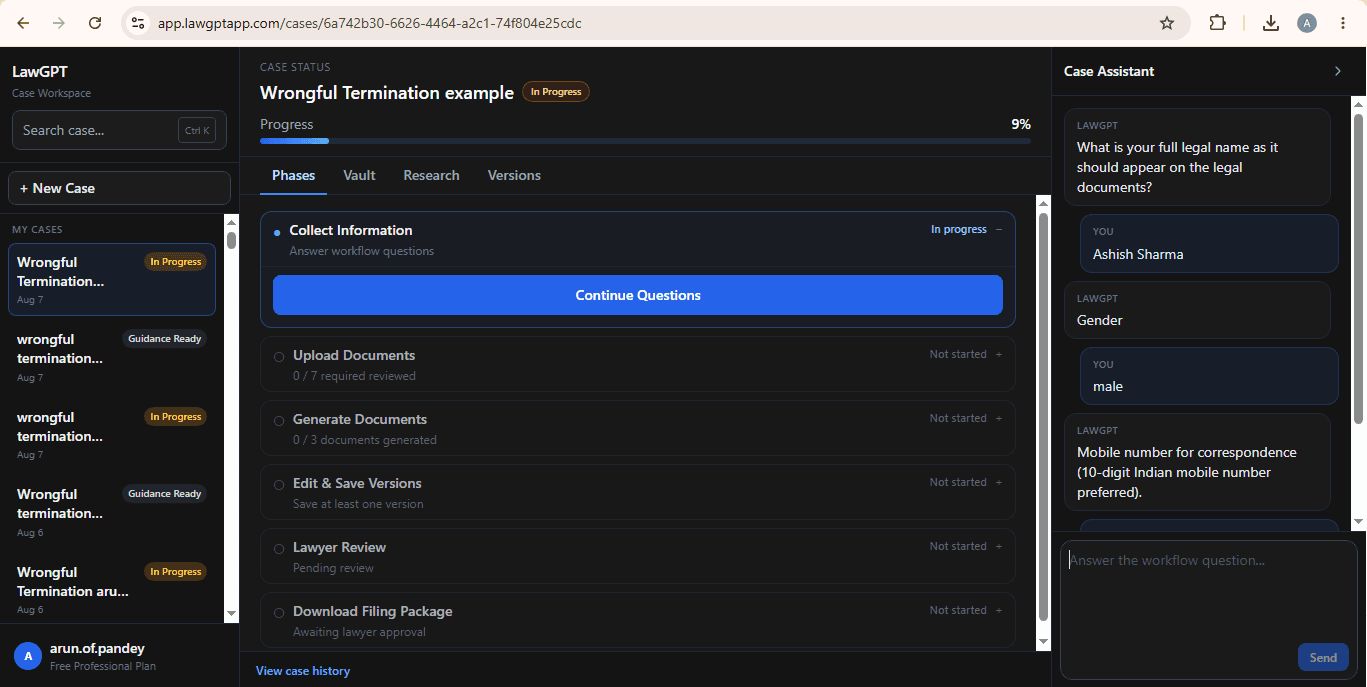
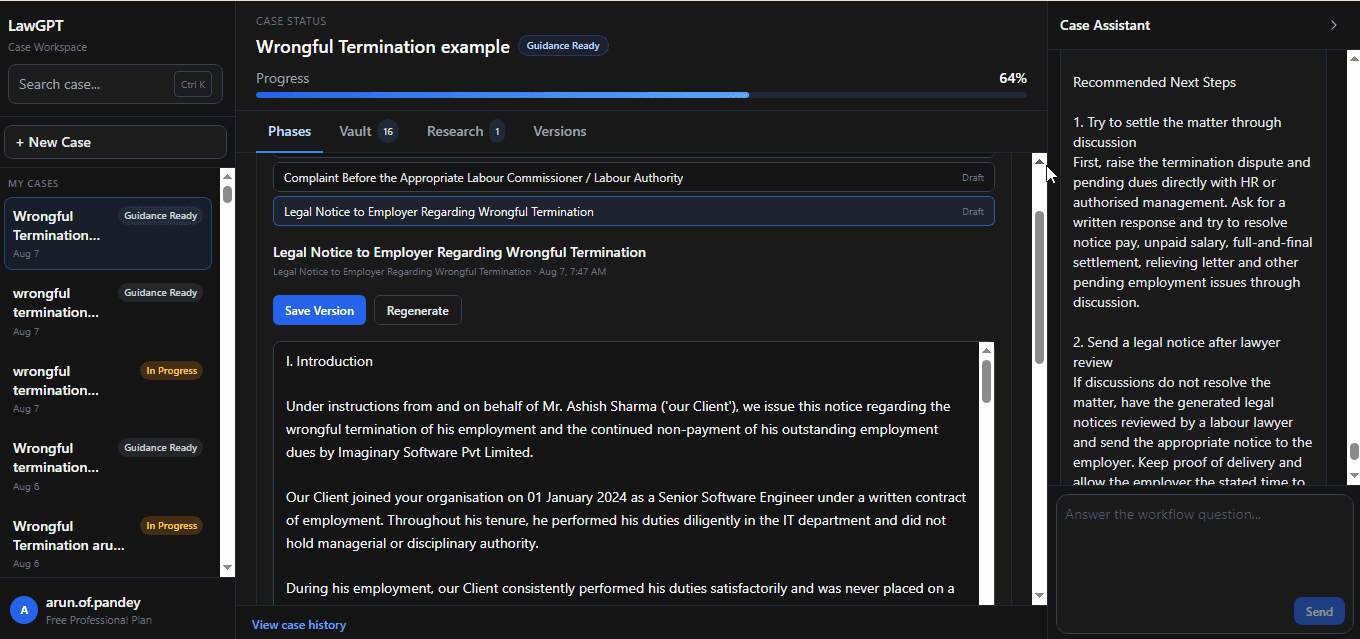
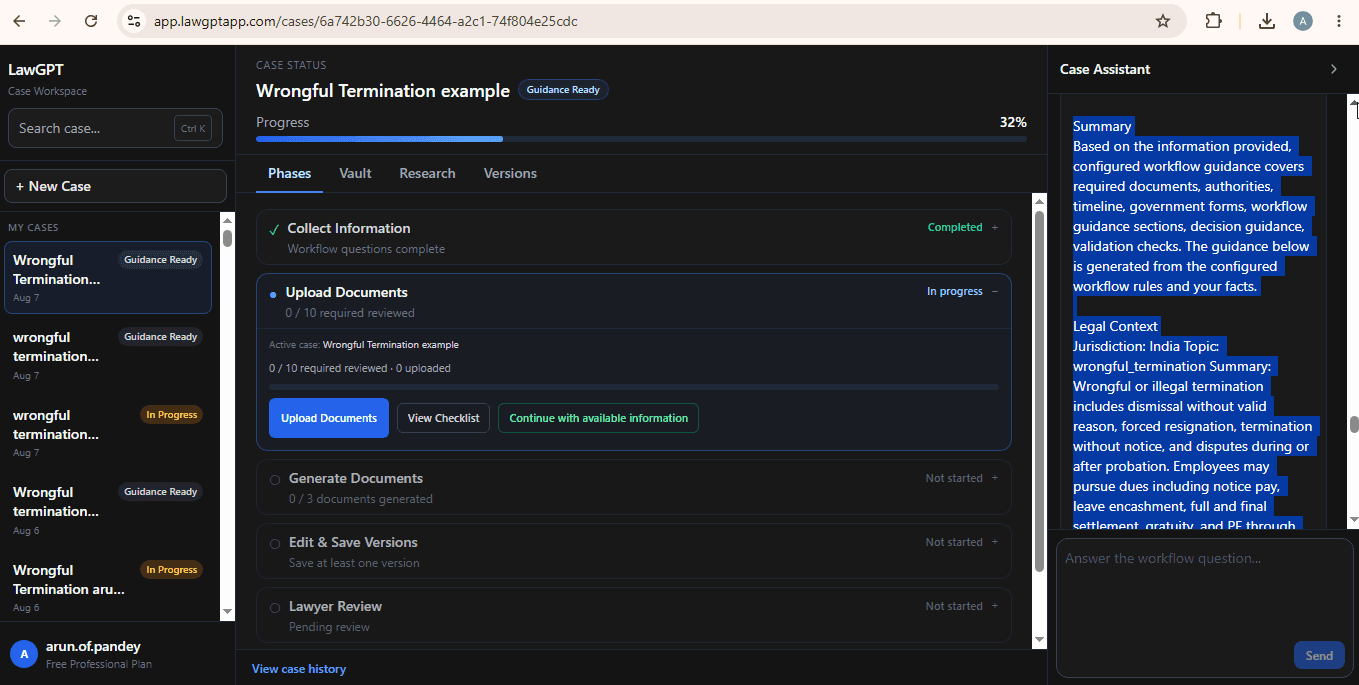
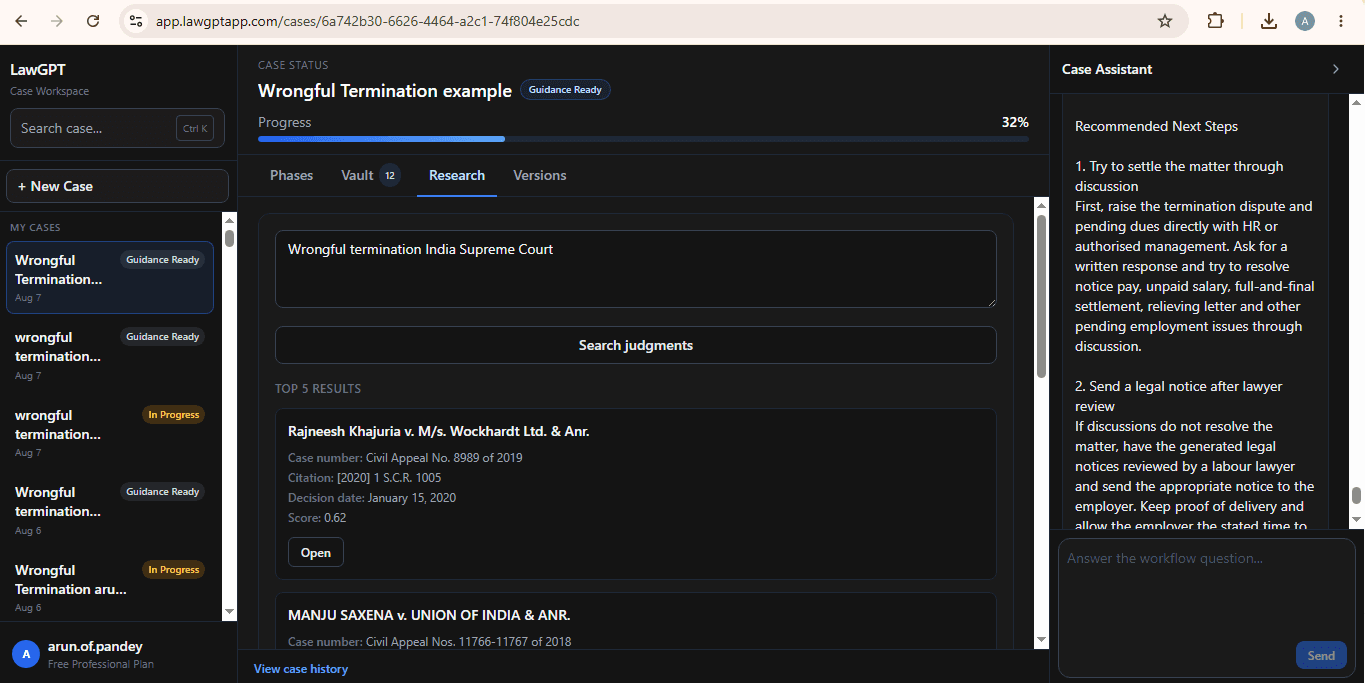
LawGPT’s wrongful termination workflow at /workflows/wrongful-termination helps you capture the notice clause, termination communication, and dues calculation in one structured matter file before you escalate. Pair that with the broader /platform toolkit when you need research context or lawyer review of the draft notice. The goal is arithmetic clarity first—emotion can wait until the numbers are locked.
Negotiation realities
Employers sometimes prefer to pay notice and a small ex gratia amount rather than litigate. Your leverage improves when your math is accurate and your tone stays professional. Avoid social-media threats; they rarely increase legal leverage and can create separate issues. If you need early relieving for a new job, consider a documented waiver exchange rather than informal silence that later becomes an “absconding” story.
Bottom line: termination without notice is lawful only when a valid contractual or statutory pathway supports it—and when process requirements for misconduct or industrial actions are met. Otherwise, notice pay and related claims remain firmly on the table.
How to calculate notice pay without guesswork
Open your appointment letter and highlight the notice clause. Note whether it refers to “basic salary,” “gross salary,” or “last drawn wages.” Then open your last three payslips and list components: basic, HRA, special allowance, bonus, variable pay. Companies sometimes compute notice pay on basic alone even when the contract points to a broader definition—or the opposite, depending on which calculation reduces their outflow. Build both interpretations in a spreadsheet and ask HR which definition they used, in writing.
Count calendar days carefully. If notice is 30 days and you were terminated on the 10th with immediate effect, the pay-in-lieu claim typically covers the contractual notice window unless a different formula is specified. Confirm whether the company already paid a partial amount inside F&F under a vague label like “ex gratia.” Relabeling notice pay as ex gratia can create tax and waiver confusion; clarity beats polite ambiguity.
Absconding allegations used to skip notice
A common employer narrative is that the employee absconded, justifying termination without notice. That narrative collapses when badge access was blocked, laptop was seized, or HR told you not to come in. Send a same-day email stating you remain ready and willing to work or to complete an orderly exit. If you were medically unfit, annex medical certificates rather than disappearing from WhatsApp groups. Silence looks like absconding; documented exclusion looks like employer-driven separation.
Bond periods and training costs
- Read the bond’s liquidated damages clause and what triggers repayment
- Check whether the employer actually provided the training consideration claimed
- See if termination by employer still triggers clawback—many clauses are one-sided
- Never accept a clawback deduction from F&F without a written computation
Employment bonds are scrutinised when they operate as restraints on livelihood rather than genuine pre-estimates of training loss. That does not mean you should ignore them; it means you should not let HR’s verbal number become an automatic deduction. Ask for the underlying calculation and the clause citation.
State Shops and Establishments overlays
Several state Shops and Establishments statutes speak to notice for employees meeting coverage conditions. These rules can add a statutory floor beneath a weak contract—or clarify expectations where the letter is silent. Because amendments differ by state, identify the establishment’s location and the Act applied in your appointment formalities. A Bengaluru tech employee and a Mumbai shop supervisor may not share identical statutory notice scaffolding even with similar private letters.
When you demand notice pay, cite the contract first and mention applicable statutory provisions second, without pretending to be a final legal opinion. The combination signals that you have done homework. Pair the demand with LawGPT organisation at /workflows/wrongful-termination so the arithmetic and clause quotes stay consistent when you escalate to a labour pathway or civil notice strategy via /platform review.
Inside the LawGPT workflow
Frequently asked questions
No universal 30-day rule covers every employee. The period usually comes from your contract and, for some categories, from state Shops and Establishments rules or industrial law. Always read your letter first.