
Employment Law
Common Mistakes After Wrongful Termination (and How to Avoid Them)
The unforced errors that weaken Indian employment claims—from signing lobby settlements to posting about HR on LinkedIn—and how to stay disciplined.
Most wrongful termination claims are damaged by unforced errors, not by obscure case law. Employers’ counsel looks for contradictions, waivers, and credibility gaps. This guide lists the mistakes we see repeatedly in Indian employment disputes—and the disciplined alternative that keeps your leverage intact.
Mistake 1 — Signing whatever ends the awkward meeting
Lobby settlements, blank declarations, or “resign voluntarily” letters typed by HR are classic traps. If you need time, say you will respond next day. If you already signed under pressure, record the pressure contemporaneously and seek advice before you assume the claim is dead. Panic signatures are common; irreversible silence afterward is optional.
Mistake 2 — Deleting evidence or returning devices wiped
Wiping a laptop in anger can look like spoliation and may breach policy. Copy your personal employment records lawfully first, then return devices cleanly. Preserve chats without fabricating screenshots or cropping context that later looks manipulative.
Mistake 3 — Public venting
LinkedIn essays and client emails about “toxic leadership” feel cathartic and often become Exhibit B against you—sometimes even grounding separate allegations. Serve legal notices privately. Keep recruiters’ explanations factual and short. Reputation management is part of legal strategy, not a separate hobby.
| Mistake | Why it hurts | Better move |
|---|---|---|
| Inconsistent dates across emails and notice | Credibility damage | One master chronology |
| Wrong company entity named | Maintainability fights | Check appointment letterhead and MCA name |
| Inflated fantasy compensation | Settlement collapse | Bottom-up dues sheet |
| Skipping service proof | Employer denies receipt | Speed post plus email archive |
| Filing in the wrong forum | Months lost | Classify workman or manager early |
Mistake 4 — Mixing criminal threats with wage claims
Threatening FIRs for ordinary dues disputes can backfire and distract from collectible claims. Criminal law is for criminal facts. Keep your employment notice focused unless true cognisable offences exist and are evidenced—then pursue them with proper advice rather than as leverage theatre.
Mistake 5 — Ghosting your own case
Missing conciliation dates, ignoring defect memos, or letting limitation drift are silent killers. Diary management is part of legal merit in practice. If you cannot attend, seek adjournment properly rather than disappearing.
Mistake 6 — Ignoring non-money terms
People chase an extra ten thousand rupees and forget experience-letter wording that costs a job offer. Price documents and timelines in the deal. A delayed relieving letter can be more expensive than a modest dues haircut if your next employer’s joining date is firm.
Anti-mistake checklist
- No signature without overnight review except genuine emergency advice
- Master chronology locked before notice drafting
- Entity names verified
- No public accusations
- Calendar of legal dates shared with someone you trust
- Settlement checklist includes letters and payment dates
How structured workflows reduce error rates
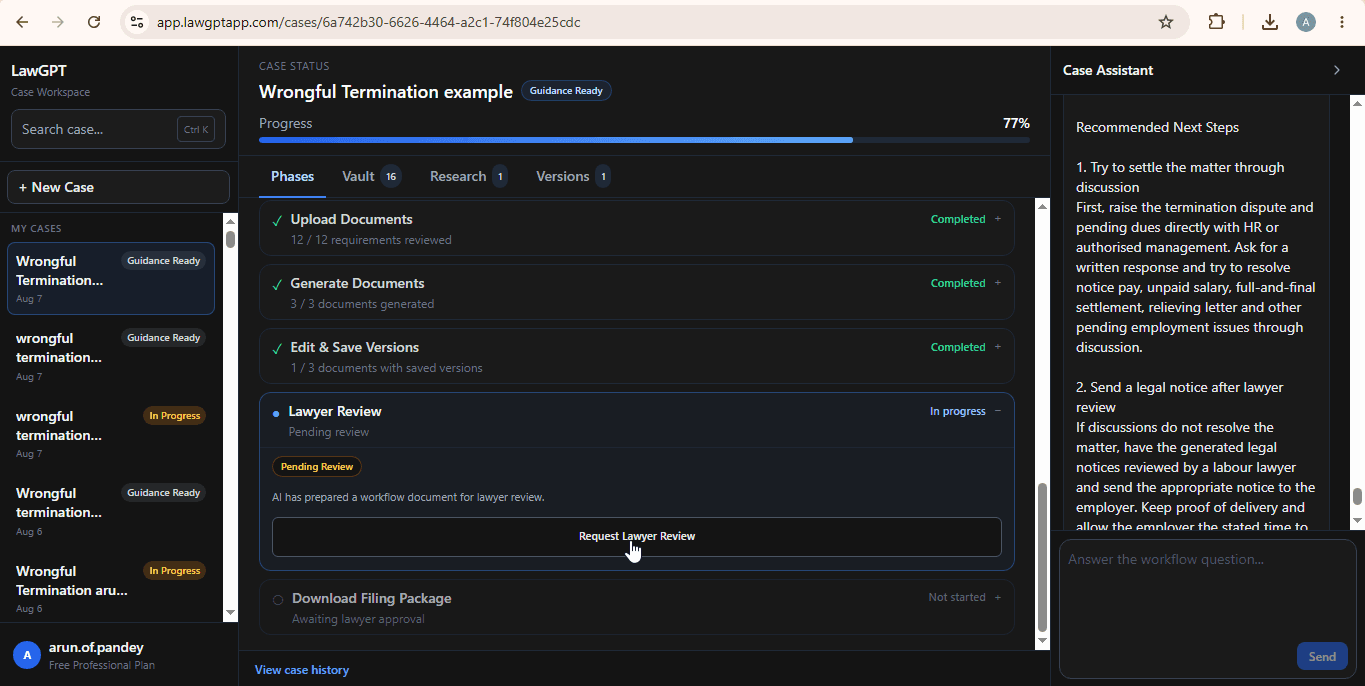
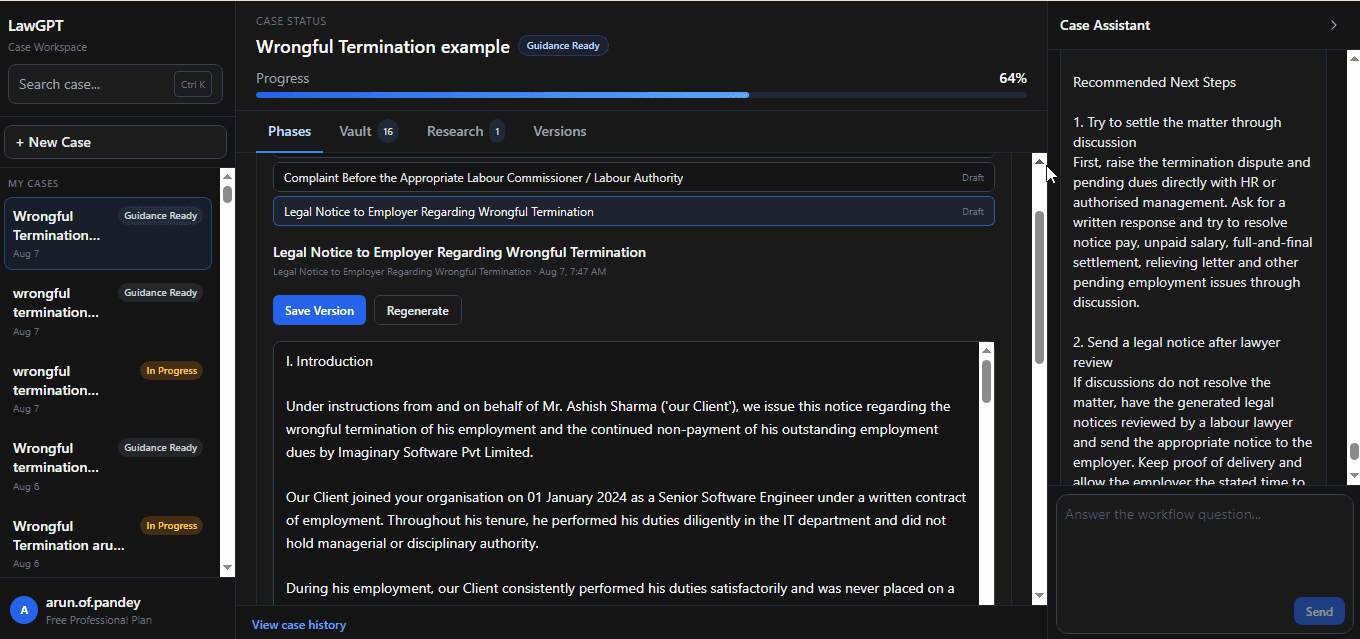
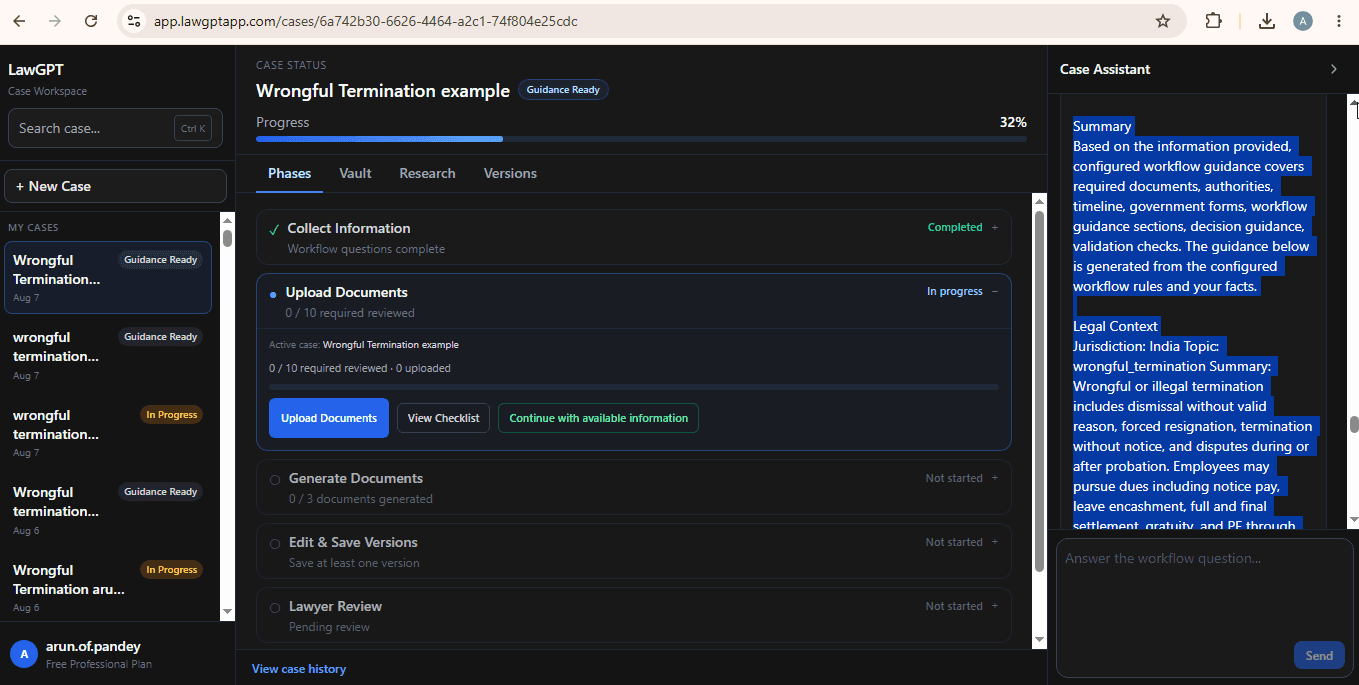
LawGPT at /workflows/wrongful-termination forces intake questions, a case summary, and aligned drafts—reducing the copy-paste drift between notice and complaint. Optional review on /platform catches tone and entity errors before service. Technology does not remove judgment, but it shrinks forgetfulness.
Avoiding mistakes will not make an unfair employer fair. It will keep your leverage intact long enough for law and negotiation to matter—and that is usually the difference between a quiet settlement and a messy, avoidable loss of credibility.
Mistake 7 — Fighting the wrong employer entity
Groups operate with multiple companies, PE-owned holding structures, and payroll entities different from the brand on the door. Serving a notice on the brand’s LinkedIn name looks passionate and fails technically. Check the appointment letter, Form 16 deductor, and PF remitting entity. If you were transferred between entities, annex transfer letters. Entity mistakes are fixable early and painful late.
Mistake 8 — Negotiating against yourself
Employees sometimes open with a huge number, then collapse to a tiny number within days, signalling desperation. Better practice: state itemised dues as non-negotiable floor, and a separate premium range for unfairness. Move the premium, not the arithmetic of unpaid salary. If you must reduce, reduce once with a reasoned explanation tied to early payment.
Another self-goal is revealing your absolute minimum on the first call. Let the other side speak. Ask them to email an offer. Respond in writing. Phone auctions favour experienced HR partners.
Mistake 9 — Ignoring the experience letter until after settlement cash clears
Cash without documents can still block your next job. Make letters simultaneous conditions precedent in any settlement. Specify wording categories: designation, period, and clean exit if agreed. If the company wants staged payment, stage letter issuance too—not cash first and letters “later.”
Mistake 10 — Copy-pasting legal theories from social media
- “Always file 420” templates
- “Automatic 6 months compensation” myths
- “Labour commissioner will reinstate in one week” fantasies
- US at-will analogies that do not travel to India
Social media can alert you to issues; it cannot plead your case. Map facts to Indian forums. Use structured education and tools—LawGPT workflows at /workflows/wrongful-termination and review on /platform—rather than viral PDFs with broken statute names.
Discipline is not meekness. You can be firm, itemised, and unyielding on unpaid dues while still avoiding the unforced errors that make winnable matters look chaotic. Opposing counsel settles clean files faster than loud ones.
Mistake 11 — Letting friends draft your legal theory
Well-meaning friends who “knew someone who got 10 lakhs” create anchoring errors. Thank them, and return to your dues sheet and classification analysis. Likewise, avoid sending your draft notice to large WhatsApp groups; leaks happen. Share drafts only with people bound by trust or professional duty.
Mistake 12 — Treating optional lawyer review as optional after disaster
The cheapest review is before service. The expensive review is after you served a notice naming the wrong entity, admitting absconding, or attaching confidential files. If your case involves stigma, pregnancy, POSH proximity, or equity, budget time for review on /platform before the PDF becomes final. Pride about doing it entirely alone is not a legal strategy.
Correcting mistakes early is itself a skill: issue a clarification email, serve a corrigendum notice if needed, or amend pleadings properly. Doubling down on an error to avoid embarrassment is how small problems become case-defining weaknesses.
Mistake 13 — Over-litigating a small dues case
Spending two years and endless emotional energy on a clearly collectible but modest notice-pay claim can be a personal loss even if you formally win. Sometimes the correct strategic move is a sharp notice, a short conciliation push, and a settlement that clears your floor quickly. Over-litigation is a mistake when driven by pride rather than expected value. Under-litigation is a mistake when stigma or large unpaid dues justify the fight. Calibrate with a written floor before you begin.
Mistake 14 — Inconsistent medical or performance stories
If you told HR you were resigning for personal reasons while privately believing you were forced out, reconcile the narrative with contemporaneous protest evidence rather than pretending the resignation email does not exist. If you claimed medical incapacity in one mail and perfect fitness in a job application the next day, expect questions. Consistency across employment, insurance, and hiring paperwork is part of credibility hygiene—and a common place DIY cases crack.
The cure for most mistakes in this guide is slow paperwork and fast calendars: slow enough to read what you sign, fast enough not to miss limitation and hearing dates. LawGPT’s intake discipline at /workflows/wrongful-termination and optional review on /platform exist to institutionalise that cure.
Mistake 15 — Celebrating too early
A promising conciliation conversation is not payment. An HR email saying “we are processing” is not UTR credit. A draft settlement is not a signed settlement. Premature celebration leads people to miss the next date or stop chasing letters. Close only on artefacts: credited money, issued letters, and recorded disposal of proceedings. Until then, remain courteously relentless.
A final recurring mistake is outsourcing your entire strategy to whoever answers the phone at HR. HR’s job includes risk management for the company. Be courteous, take notes, and still verify every promise against written artefacts. Politeness is not naïveté; naïveté is treating oral assurances as closing documents.
Before you send any notice, ask a trusted person to read only for contradictions—not for legal genius. Fresh eyes catch the date that does not match your payslip and the entity name that does not match Form 16. That ten-minute review prevents months of maintainability noise and is cheaper than correcting a served PDF.
Inside the LawGPT workflow
Frequently asked questions
Stop further posts, preserve what you wrote, and get advice on tone-down strategy. Do not delete in a panic without guidance if litigation is foreseeable—discuss preservation with counsel.