
Employment Law
How to Send a Legal Notice for Wrongful Termination
Step-by-step guidance on drafting, sending, and following up a wrongful termination legal notice in India—what to demand, how to serve it, and what happens next.
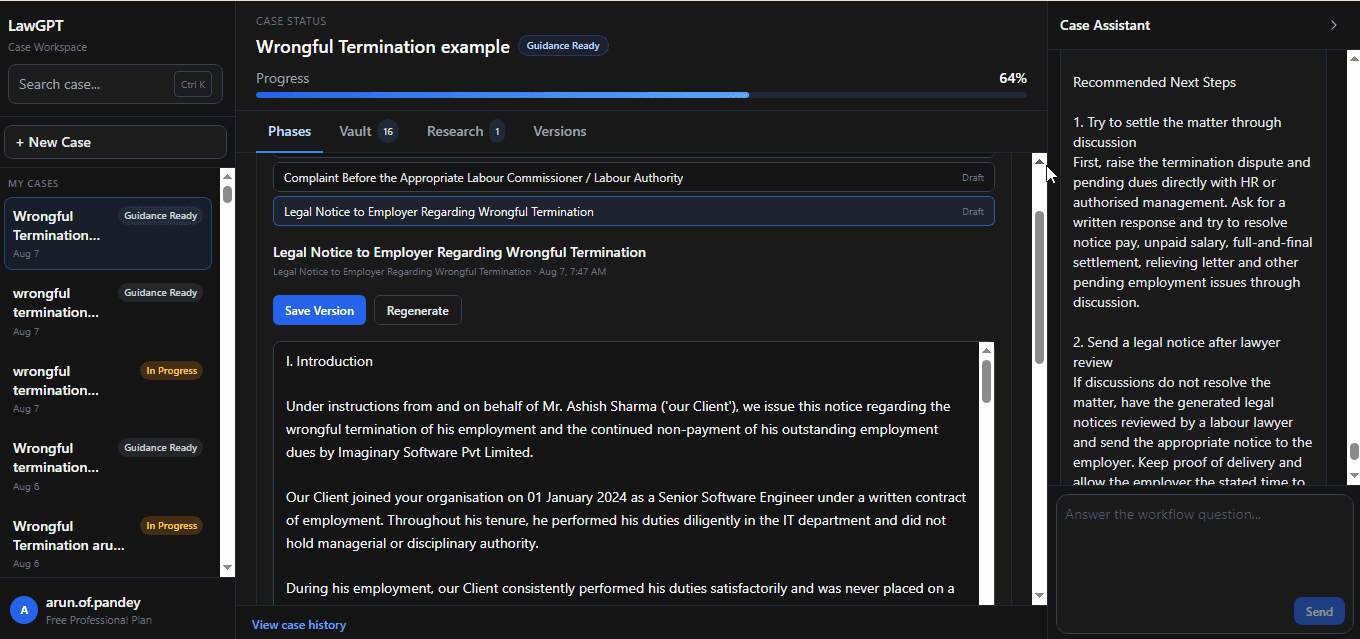
A legal notice is often the first formal shot across the bow after an unfair exit. It is not a court order—it is a structured demand that puts facts on record, shows seriousness, and frequently opens settlement discussions. Done well, it becomes the backbone of a later Labour Commissioner complaint or plaint. Done poorly, it creates contradictions you will spend months explaining away under cross-questions.
When a notice is worth sending
Send a notice when dues are unpaid, notice pay is skipped, the termination reason appears retaliatory or false, or you need a clean paper trail before approaching authorities. If a generous written settlement is already on the table and you are comfortable with it, you may negotiate without a notice—but still document the deal carefully. If limitation periods are approaching or the employer is cutting access to evidence, accelerate rather than wait for a “cooler” mood that never arrives.
Anatomy of an effective employment notice
Strong notices are boring in the best way: chronological facts, legal basis, precise demands, and a deadline. Avoid abuse, threats of criminal cases you cannot sustain, or confidential data dumps. Address the company through its registered office and the HR or legal contacts you used during employment. If a parent company directed the exit, counsel may advise including additional parties—align parties with who employed you on paper rather than guessing from LinkedIn branding.
- Parties: your full name, designation, employee ID, and employer’s legal name and address
- Engagement facts: joining date, last drawn salary, place of work, reporting lines if relevant
- Narrative: key events leading to termination, with dates
- Breach: which contract clauses or legal duties were violated
- Cause of action: what you lost—salary, notice pay, reputation, opportunity
- Demands: itemised amounts and non-monetary asks such as experience and relieving letters
- Deadline: typically 7 to 15 days to comply or respond
- Reservation of rights: further proceedings without further notice if ignored
Demands you can usually include
| Demand | Why it matters | Evidence to cite |
|---|---|---|
| Unpaid salary and incentives | Immediate cash harm | Payslips, incentive plan documents |
| Notice pay | Contractual exit cost | Appointment clause and termination date |
| Leave encashment and expenses | Often omitted from F&F | Leave policy, claim emails |
| Gratuity if eligible | Statutory dues | Tenure calculation and forms |
| Relieving and experience letters | Next-job friction | HR email trails |
| Withdrawal of stigma allegations | Career protection | Termination letter language |
Service: make proof boring and bulletproof
Serve by speed post with acknowledgment, courier with tracking, and email to known HR and legal IDs. Keep the PDF stable—do not edit the served version later. If you engage an advocate, the notice goes on their letterhead; if you send as party-in-person, stay formal. Photograph envelopes and archive tracking pages as PDFs. When the company refuses delivery, refusal itself can support your diligence narrative in later proceedings.
After the deadline
Employers may pay, partially offer, deny facts, or stay silent. Evaluate any offer against your itemised dues and career needs. If you proceed to the Labour Commissioner or court, your notice and postal receipts become early exhibits. Update your chronology if the employer’s reply adds new facts—but do not rewrite history to sound better than your first emails.
Notice execution checklist
- Freeze the final PDF before service
- Serve registered post and email at minimum
- Diary the response deadline
- Save the reply without annotating the original file
- Decide settlement versus complaint with clear numbers
- Prepare the next pleading using the same fact pattern
Drafting with structure, not rage
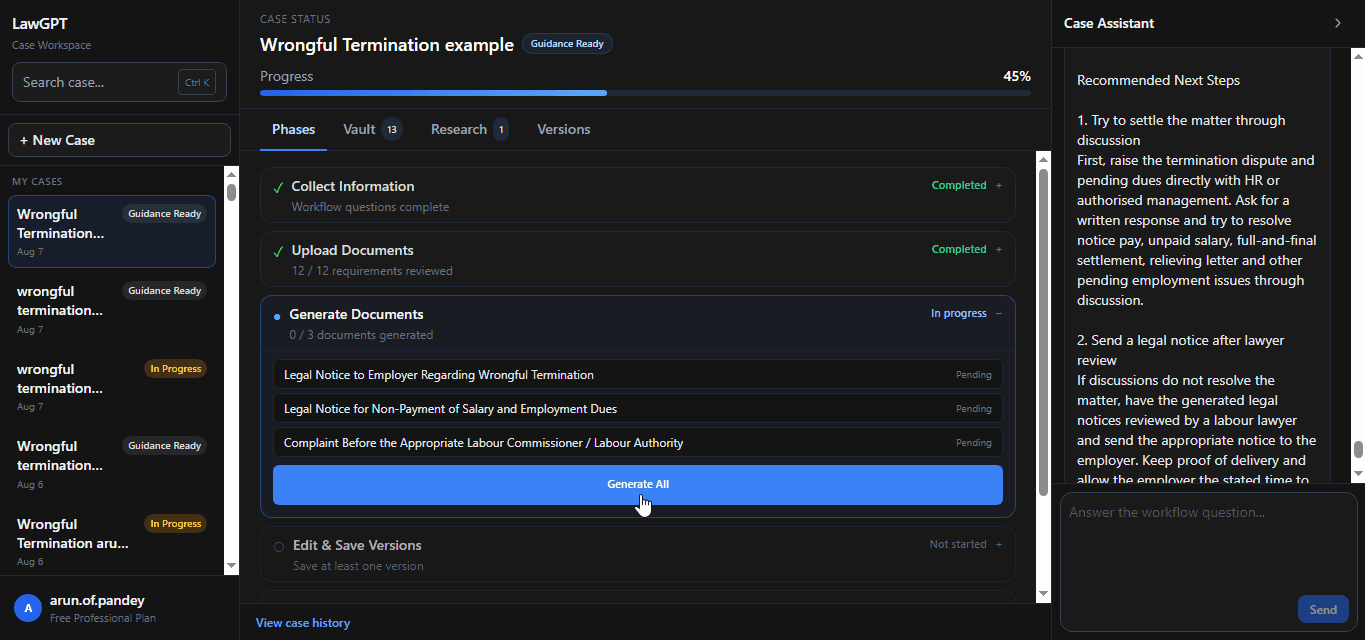
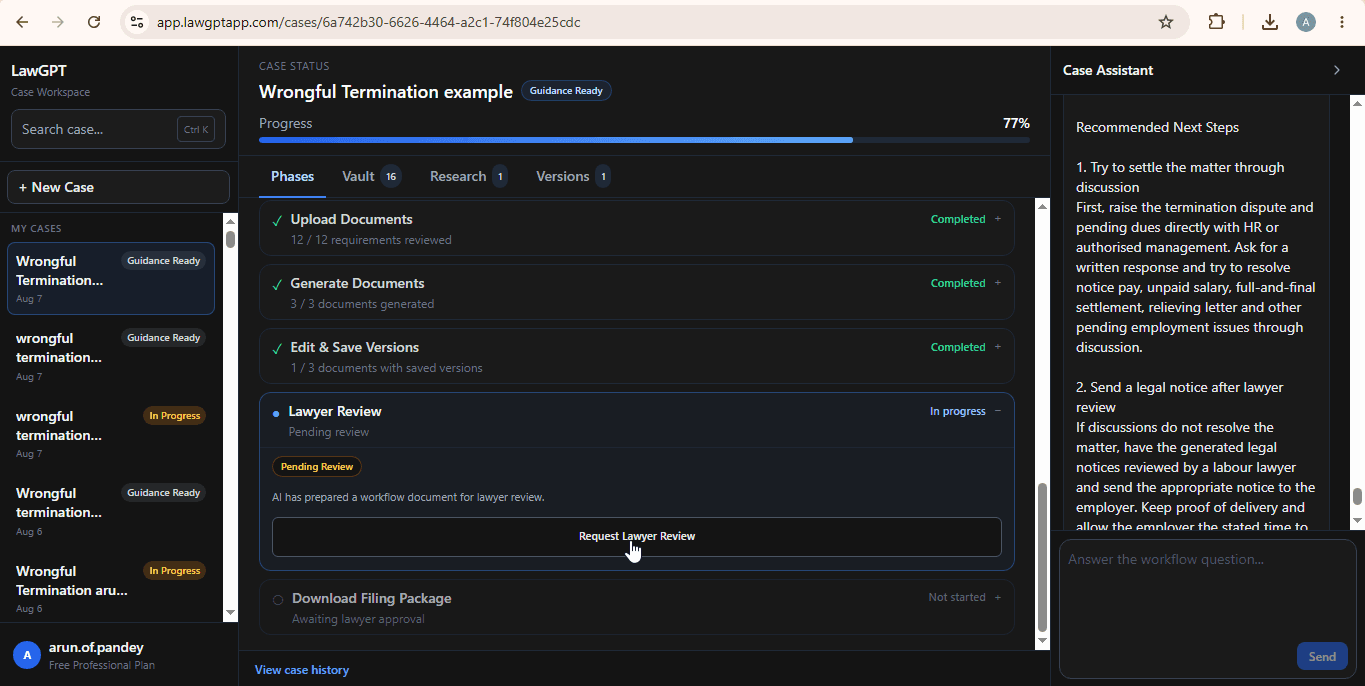
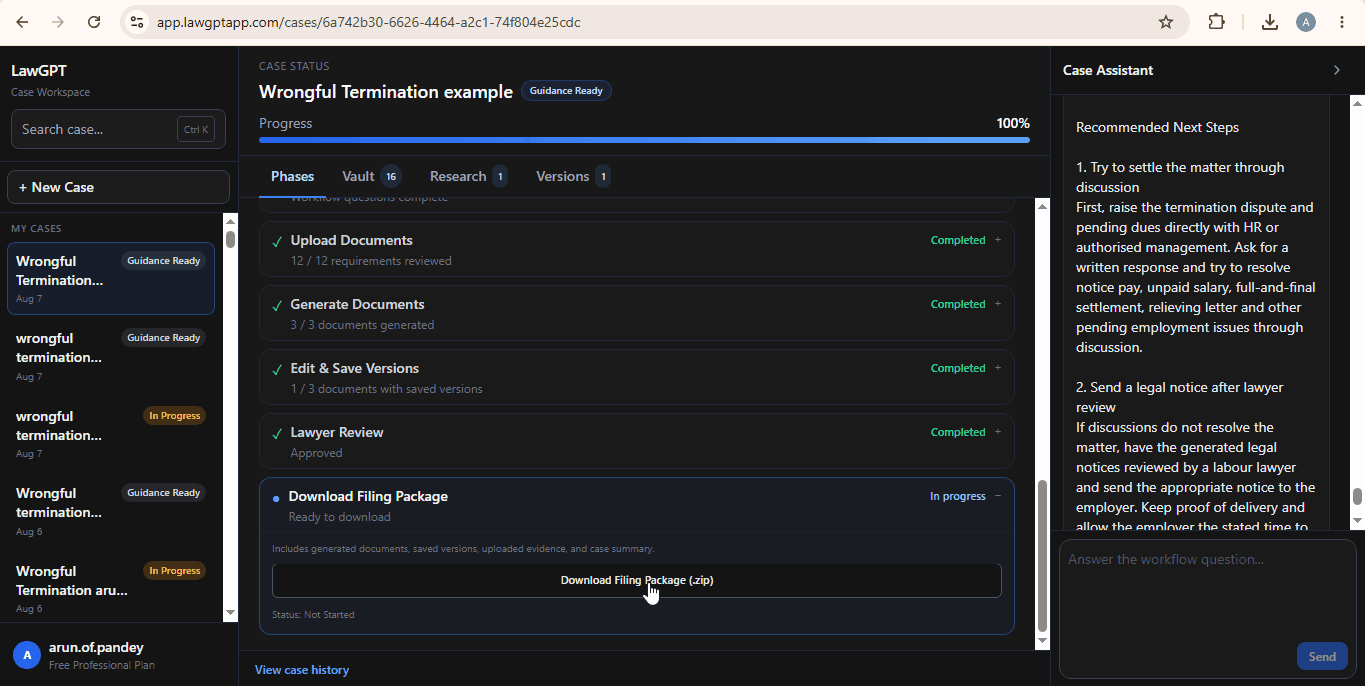
LawGPT at /workflows/wrongful-termination is built to turn guided answers into a coherent notice draft aligned with your case summary and evidence list. Use /platform when you want optional lawyer review before the envelope goes out. The software path does not replace advocacy judgment; it reduces blank-page time and keeps facts consistent across later filings.
Common drafting mistakes
- Inflating amounts you cannot support with documents
- Alleging criminal breach of trust casually
- Omitting the appointment clause you rely on
- Using a wrong employer legal entity name
- Setting an unrealistic 24-hour deadline without urgency justification
- Contradicting your resignation email if one exists
A precise notice will not guarantee payment—but an imprecise one almost guarantees delay. Treat the notice as Exhibit 1 of a future case file, not as venting. That mindset alone improves outcomes more than any dramatic closing paragraph.
Tone, ethics, and what never to attach
A legal notice is read by HR, in-house counsel, and sometimes a business head deciding whether to settle. Threats of media exposure, tagging clients, or publishing salary sheets usually reduce settlement appetite and can create separate legal risk. Attach only documents that support your claim: appointment letter extracts, termination mail, payslips, and your earlier written requests. Do not attach confidential client files, source code, or personal data of colleagues. Those attachments can transform a wage dispute into a misconduct narrative against you.
Write in short numbered paragraphs. Prefer “On 12 February 2026, the Company emailed a termination letter citing performance” over “the Company viciously destroyed my career.” Adjectives do not prove breach; dates and clause numbers do. If English is uncomfortable, it is better to use clear simple sentences than ornate legalese copied from the internet that misstates the law.
Choosing between advocate letterhead and self-notice
Advocate notices signal that you have professional assistance and often improve response rates. Self-notices are still valid in many contexts and can be appropriate for straightforward unpaid dues. Hybrid approaches also exist: you draft with structure, then an advocate reviews and issues. What matters is accuracy of parties, facts, and demands. A beautiful letterhead with the wrong company entity is still a weak notice.
Service logistics people underestimate
- Find the registered office address from MCA records or the appointment letter—not only the coworking space you attended
- Serve HR email and legal@ aliases you used during employment
- If the company uses a campus address different from registered office, consider serving both
- Keep unopened returned envelopes as proof of attempted service
For multi-entity groups, confirm which company issued your appointment letter and Form 16. Serving the brand’s marketing name rather than the legal employer invites a technical objection. If two group companies were involved in dual employment or secondment, narrate that carefully and seek advice before naming parties.
Using the notice as a settlement instrument
Your notice can invite an amicable resolution meeting while still reserving litigation rights. Provide a bank account detail only in a controlled way if you are open to immediate payment—some advocates prefer payment through a documented settlement. If the employer responds with a without-prejudice offer, evaluate it against your dues sheet, not against your anger. Counter in writing. If you use LawGPT at /workflows/wrongful-termination, keep the notice, case summary, and later complaint on the same fact spine so nothing in settlement talks contradicts your formal record on /platform.
Sample demand structure you can adapt
Think of the demand section as a mini spreadsheet in prose. First, state unpaid salary for named months with amounts. Second, state notice pay with the clause number and day count. Third, state leave encashment and expenses with policy references. Fourth, state statutory dues such as gratuity if eligible. Fifth, state non-monetary demands with deadlines—relieving letter within seven days of payment, experience letter with agreed descriptors, withdrawal of absconding labels if wrongly recorded. This structure lets the employer’s finance team process something concrete instead of forwarding a rant.
If you claim compensation beyond dues, separate it visually in the notice as “without prejudice to statutory and contractual dues, additional compensation of ₹___ is demanded for unfair dismissal / reputational stigma grounded in the following facts.” That separation prevents the company from pretending your entire claim is speculative when half of it is arithmetic.
Follow-up cadence after service
- Day 0: serve post and email; store tracking
- Day 3: confirm tracking movement; do not call angrily
- Deadline day: if silent, send a short email recording non-response
- Deadline +2 to 5 days: decide settlement call versus labour filing
- If talks open: move to written term sheet within one week
Discipline after service matters as much as drafting. Many employees serve a strong notice then vanish into interview prep, allowing the employer to claim they never had a chance to resolve. Keep the cadence even if you are busy.
Inside the LawGPT workflow
Frequently asked questions
Not always legally mandatory, but advocate notices carry formality and drafting discipline. For complex misconduct or large claims, professional review is wise.