
Criminal procedure
Documents Required When Police Refuse an FIR: Complete Filing File Checklist
Build a credible FIR-refusal file: complaint copies, acknowledgement proof, evidence logs, witness notes, medical records, and court-ready organisation.
When an FIR is not registered, the first evidence you need is often evidence of your own approach. Many complainants preserve screenshots of the incident but cannot show which complaint was submitted, whether it was signed, what annexures were attached, or what happened at the station. Create a file before emotions and repeated retelling change the record. The aim is not to create an impressive volume; it is to preserve authentic, traceable material.
Separate documents into four folders: complaint-route papers, incident evidence, corroboration, and administrative record. Complaint-route papers show what you told authorities. Incident evidence shows the alleged event. Corroboration includes witness and contextual material. Administrative records cover postal tracking, appointments, notices, and case numbers. This separation helps an advocate quickly see what proves facts and what proves that you sought help.
Core complaint-route papers
Do not leave home without copies
- Signed station complaint with page count
- Any station receipt, diary/GD/DD reference, or written response
- Dated refusal note made immediately after the visit
- SP/senior-officer complaint and complete annexure index
- Postal, courier, portal, or official-email delivery proof
- A dispatch log showing authority, method, date, and result
A refusal note should be modest and factual. Write the date, approximate time, station, officer designation or description, who accompanied you, what you tendered, and what was said. Mark it as your contemporaneous note; do not present it as an official police document. If a companion was present, ask them to make their own note in their own words. Identical “witness statements” drafted by one person can look coached.
For digital evidence, retain the original device and application where possible. Export chats using the platform's own function, capture the surrounding context, and write down account identifiers, URLs, dates, and time zone. A cropped image can be useful for reading but may not prove sender, recipient, or sequence. Do not edit, annotate over, or forward the only original. Make a backup copy and give your lawyer a working copy.
| Material | Original to preserve | Working copy for filing |
|---|---|---|
| Chat or email | Device/account export and metadata | Readable PDF/screenshots with source note |
| CCTV lead | Exact camera/location/time range | Written preservation request or map |
| Medical record | Issued record and bills | Legible scan with chronology entry |
| Photograph/video | Original file with device details | Copy labelled by date, location, creator |
| Witness information | Contact and personal knowledge note | Neutral witness list, not scripted statement |
Documents people wrongly think are mandatory
You do not need a lawyer's letter, a notarised affidavit, a perfect legal section, or a police officer's signature before you can report a serious incident. Requirements change when a court route is selected, and an advocate can advise on affidavit or verification rules. Do not delay an urgent safety complaint because you lack a property document, a formal medical report, or a “certificate” from someone online. State what is available and what remains to be obtained.
Conversely, do not submit invented proof to fill a perceived gap. A fabricated call recording, altered screenshot, backdated receipt, or false medical claim can undermine the whole matter. If a fact is uncertain, describe the uncertainty. If an estimate is provisional, say so. Honest limitations let an investigator focus on obtaining the missing evidence lawfully.
The advocate briefing packet
Prepare a one-page front sheet with the incident date, station approach date, senior-officer dispatch date, immediate risk, names of key persons, and a numbered list of annexures. Add a chronology with one row per event. Put only short, relevant evidence in the first packet; keep a supplemental archive available. A lawyer who can understand the case in ten minutes can spend the next hour on strategy rather than hunting for a screenshot.
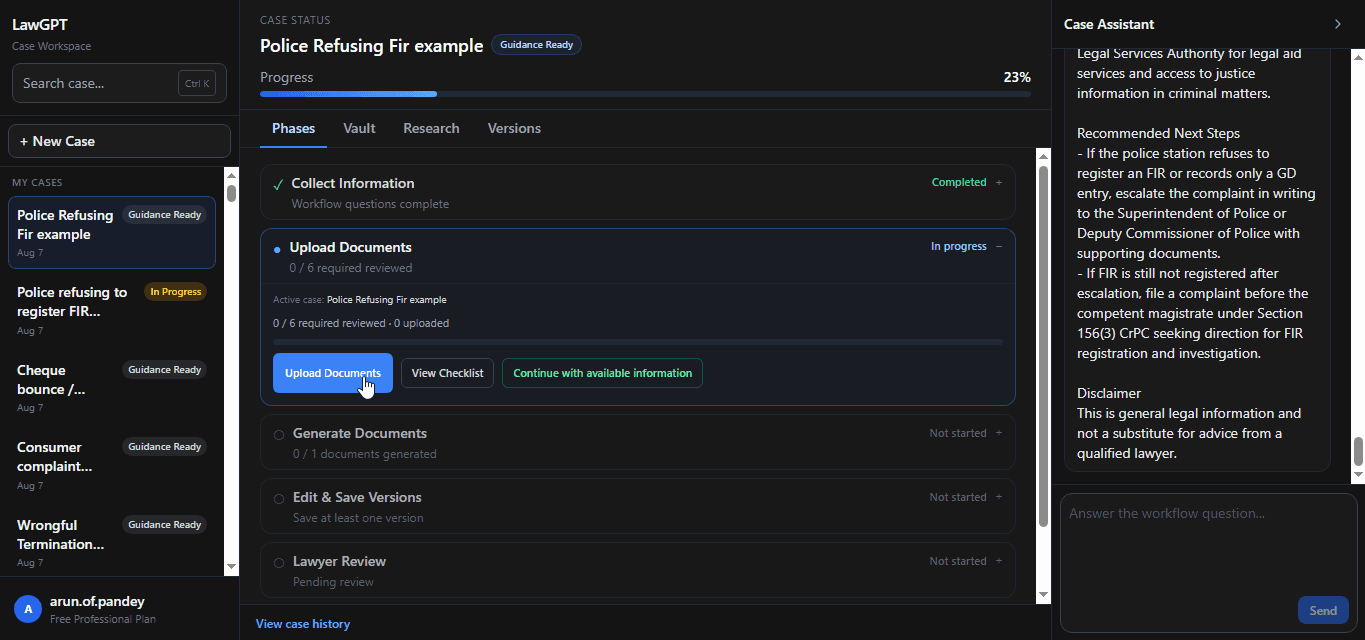
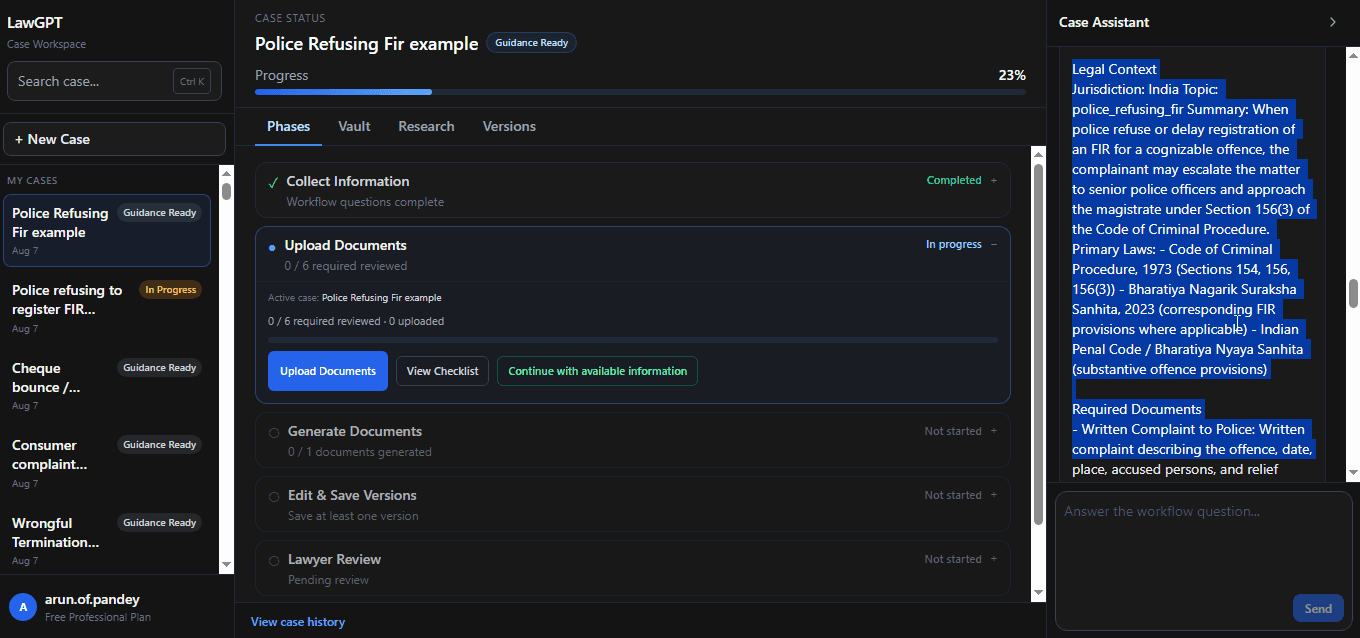
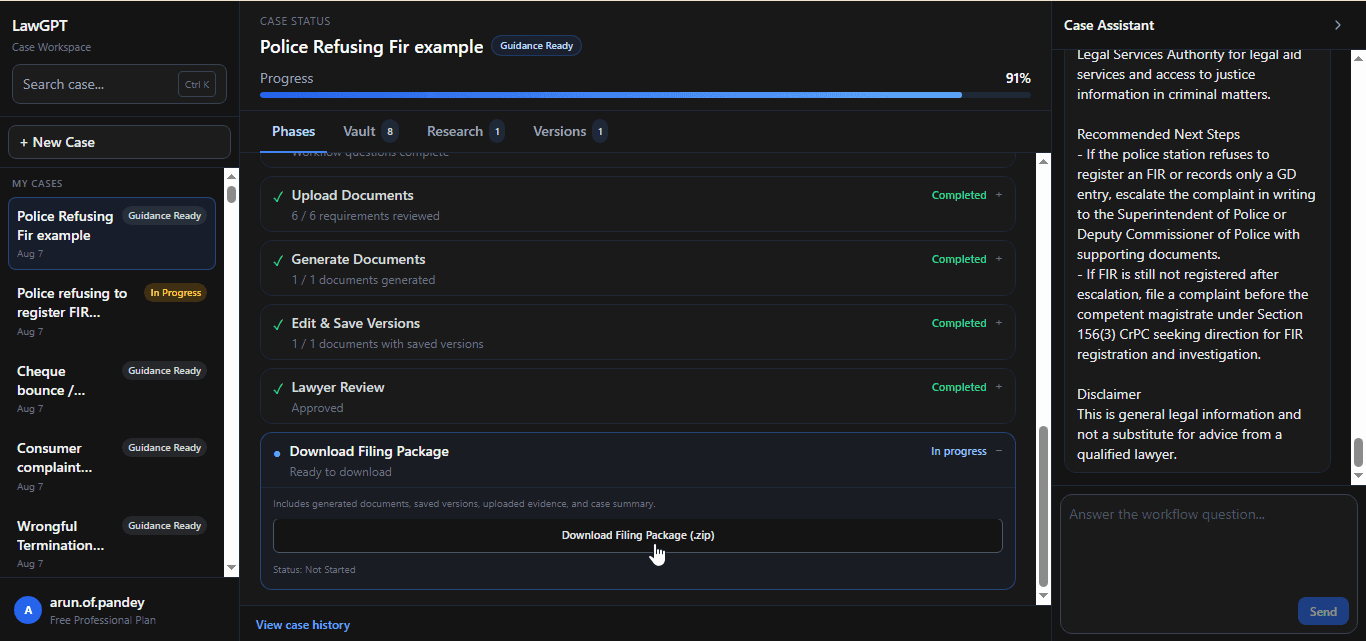
Use the Police Refusing FIR workflow to create an organised checklist and document package. It cannot authenticate evidence or replace lawyer review of privacy, admissibility, and preservation issues.
Preserve provenance, not just copies
For each important item, note who created it, where it came from, when you received it, and whether the filing copy is complete or redacted. This is particularly important for messages, recordings, photographs, and videos. Keep an untouched original where possible and prepare a readable working copy for counsel. Do not alter timestamps, annotate over the source, or crop context from the only saved version.
A clean evidence log can be simple: item number, short description, source, relevant date, storage location, and disclosure history. It helps you avoid submitting a different file from the one you retained and lets counsel quickly identify what needs technical or legal advice.
Privacy is part of file quality
A complete file can contain identity information, medical details, children's information, financial records, or intimate communications. Share it only with a verified authority or professional who needs it. Use redacted copies for broader support discussions, but retain an unredacted original and tell counsel what you removed. Privacy-conscious handling reduces harm without concealing relevant information from the lawful forum.
Do not delay an urgent report because every document is not perfect. State what you have, identify material that may be obtained later, and seek advice. Authentic incomplete material is safer than a fabricated attempt to fill a gap.
Inside the LawGPT workflow
Frequently asked questions
Preserve your signed copy, a contemporaneous note, companion notes, and any traceable later dispatch. Ask counsel how to present the absence honestly.