
Criminal procedure
FIR Refusal Evidence Checklist: Preserve Proof Before It Disappears
A lawful evidence-preservation checklist for FIR refusal complaints: physical evidence, digital records, CCTV leads, witnesses, injury records, and chain-of-custody notes.
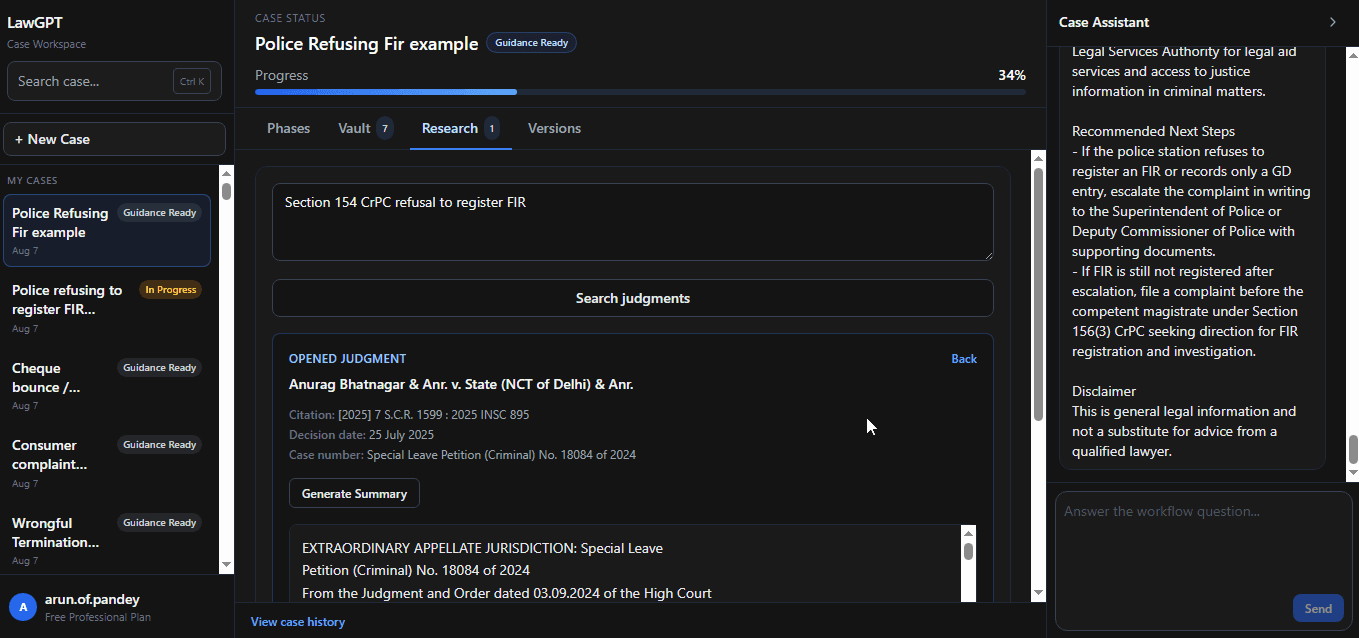
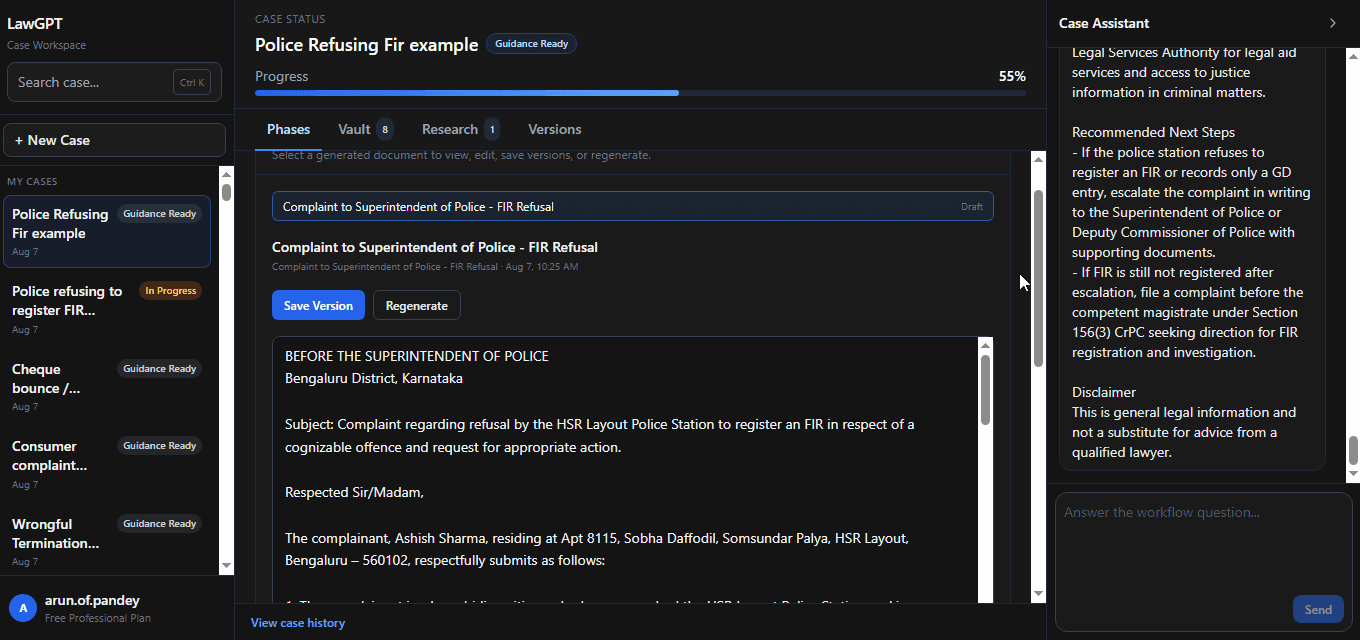
Police Refusing FIR tutorial · 3 min · plays inside LawGPT
Evidence preservation is not detective work. A complainant's role is to protect genuine material, identify where additional material may exist, and avoid unlawful collection. Police and courts have powers a private citizen does not. You can write down the location of a camera, preserve your own messages, obtain your own medical records, and keep a witness contact list. You should not hack an account, trespass to seize a device, install spyware, threaten a witness, or edit a file to make it clearer.
Start with an evidence map. On the left, write each material event. On the right, write what could prove or disprove it: an eyewitness, CCTV, call log, message, bill, access record, medical examination, photograph, or location record. Then mark the risk of loss and the owner or custodian. This turns a vague instruction to “preserve everything” into a short list an advocate can use for lawful requests.
Digital evidence
Digital preservation essentials
- Keep the original device and account available
- Export chats where the platform permits and retain the unedited original
- Capture full context, identifiers, dates, URLs, and time zone
- Back up files in a secure location without renaming away original metadata
- Record who created each file and when you obtained it
- Do not access accounts, cloud folders, or devices you are not authorised to access
Screenshots are often only a doorway to the real record. A screenshot may not show sender identity, message sequence, edited status, or date context. Preserve it, but also retain the underlying chat, email, link, or file. If a platform item may be deleted, write down the exact account, URL, timestamp, and why it matters. Ask counsel about a lawful preservation request; do not tag the platform publicly or contact the suspected person to demand they keep evidence.
Physical, medical, and location evidence
Photograph injuries, damage, objects, and locations safely, but do not disturb a scene or handle a potential weapon. Seek medical care when needed; clinical documentation serves health first and may also be relevant later. Keep prescriptions, discharge summaries, bills, and appointment records in their issued form. For a location, record address, landmark, lighting, camera direction, and approximate time range. A request that says “CCTV somewhere near the market” is much harder to act upon than one that identifies a shop camera facing a particular lane from 7:30 to 8:00 pm.
| Evidence category | What you can do now | What requires caution |
|---|---|---|
| CCTV | Note exact place, owner, direction, time range | Do not demand or alter footage; seek lawful preservation advice. |
| Witness | Record name, contact, and personal knowledge | Do not script, coach, or pressure testimony. |
| Medical | Get treatment and retain issued records | Do not exaggerate symptoms or alter reports. |
| Object/document | Photograph and store safely if yours | Do not seize property belonging to another person. |
| Online post | Save URL, context, export, and screenshots | Do not hack, impersonate, or doxx anyone. |
Evidence logs and chain of custody
You do not need laboratory terminology to keep a useful log. For every important file or object, note what it is, where it came from, original location, date/time acquired, person who handled it, and copies created. Keep original files read-only if possible and make working copies for lawyers or filing. If you send something to an authority, obtain a receipt or list it in your annexure index. This record can explain authenticity later without making unsupported claims about technical proof.
Do not assume that more material is always better. A hundred irrelevant family chats may expose private third parties and hide the key message. Give your advocate a full archive but prepare a focused list of material facts and corresponding exhibits. Redaction may be necessary for copies, but preserve an unredacted original and disclose the redaction to counsel.
Evidence at risk after an FIR refusal
Tell the senior officer or lawyer about evidence that is especially time-sensitive: CCTV with short overwrite cycles, rental-device logs, hospital footage, volatile online posts, a witness planning to leave, or an ongoing threat. State the risk specifically and honestly. An urgent preservation request is not an accusation that evidence will certainly be destroyed; it is a request grounded in the practical risk of loss.
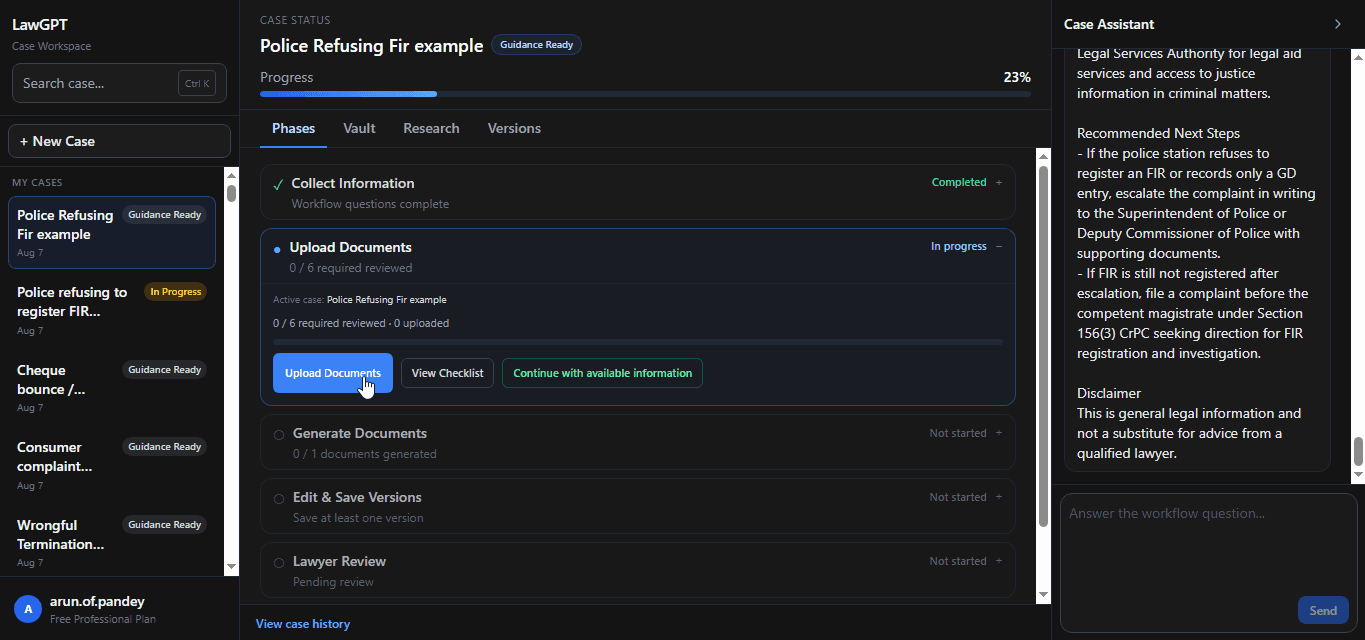
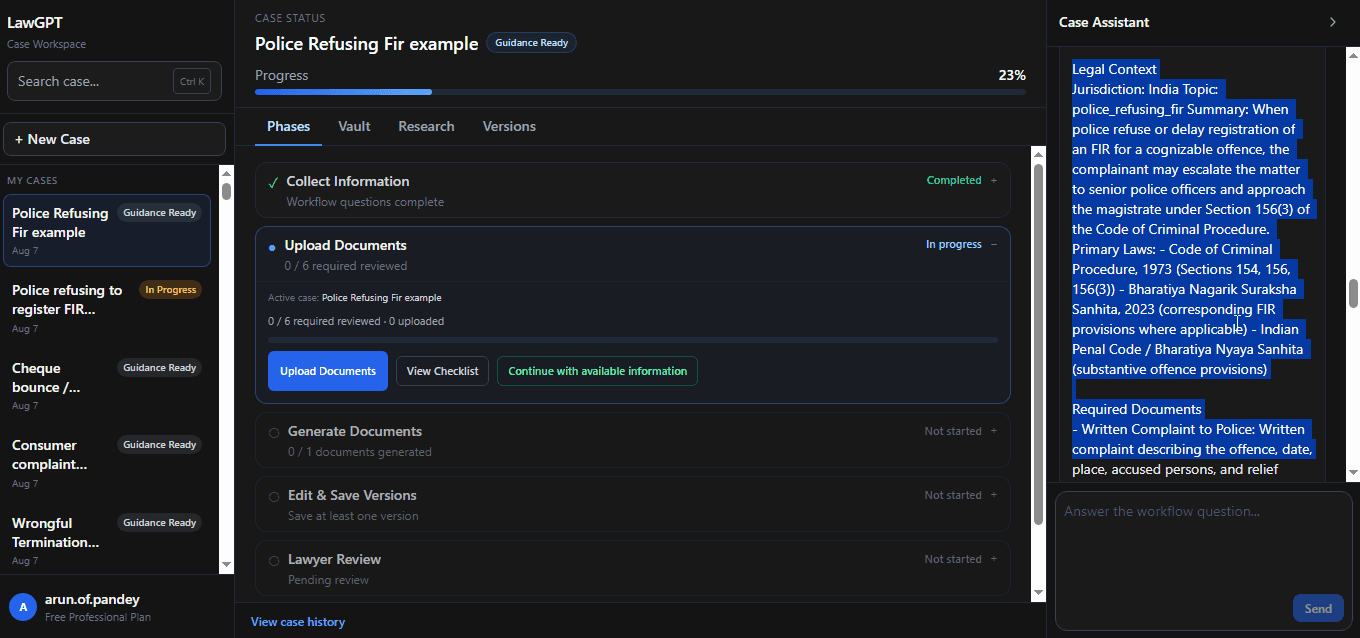
The Police Refusing FIR workflow can turn your evidence map into a checklist and annexure index. It cannot obtain records, authenticate files, or authorise private access to data.
Preservation is not private investigation
You may retain your own records, list possible sources, and make lawful requests for preservation. You should not enter premises, take another person's device, guess passwords, impersonate an account holder, install surveillance, or persuade a witness to hand over information they cannot lawfully disclose. Those steps can create separate legal and safety problems even when the underlying complaint is genuine.
If a source is controlled by a third party, record its name, address or account, the relevant date range, and why it matters. Give that lead to counsel or the appropriate authority. Specific leads are more useful than demands that someone “collect all proof.”
Review before sharing
Before sending a digital bundle, check that it opens, is legible, and contains the relevant context. Keep the original file separate from the filing extract. Name copies consistently and note whether a file was exported, downloaded, photographed, or received from another person. A simple review prevents accidental omission of a key page or disclosure of unrelated private material.
If you do not understand a file's source or whether it was edited, say so. Technical authenticity and admissibility may need expert or legal evaluation; honesty about uncertainty is better than a confident claim you cannot support.
Inside the LawGPT workflow
Frequently asked questions
You may make a polite preservation request, but do not pressure or alter footage. Get legal advice about formal requests.