
Criminal procedure
Complaint to Superintendent of Police for FIR Refusal: Format and Filing Strategy
How to prepare an accurate senior-police complaint after a station does not register your information, including annexures, delivery proof, and follow-up discipline.
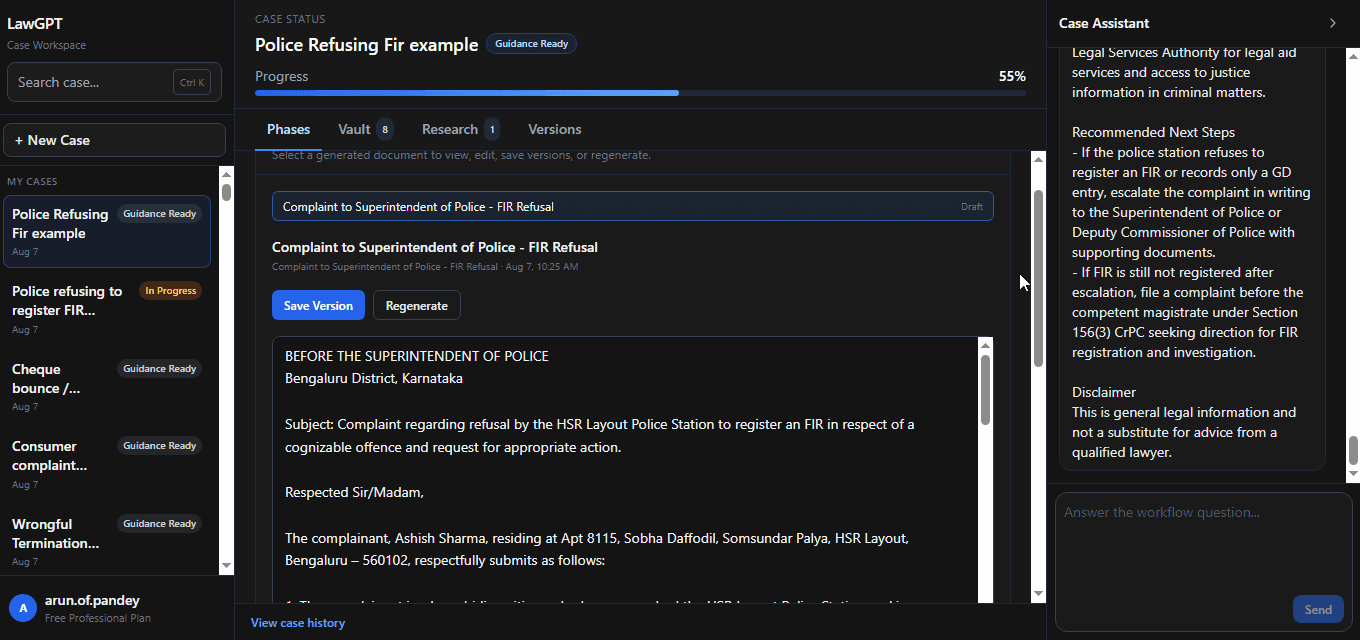
A complaint to the Superintendent of Police is useful only if a busy senior office can understand it quickly. It is not a place to paste hundreds of screenshots, demand immediate arrests, or restart the story with new allegations. Treat it as an escalation record: what happened, what you first gave the station, what response or non-response occurred, why the facts require lawful attention, what proof is enclosed, and how to contact you safely.
Check the correct authority before dispatch. District structures, titles, and official electronic channels differ. Use the official website, published address, or counsel's confirmation rather than a social-media page. If you send by post or courier, preserve the receipt and tracking result. If an official email or portal is used, preserve a PDF of what you submitted, delivery acknowledgement, and the complete attachment list. A screenshot of a sent email alone does not prove receipt, but it is still part of the chronology.
A practical structure for the complaint
- Subject line: state that it concerns non-registration or non-action on a prior dated complaint; avoid conclusions that you cannot prove.
- Identity and safe contact details: give the complainant's name, address or service address, phone/email, and any safety sensitivity.
- Core facts: narrate events in date order, naming people only where you can identify them and marking uncertainty honestly.
- Station approach: identify the police station, date/time, officer if known, document tendered, and response received.
- Request: ask for the information to be considered and dealt with according to law, with appropriate acknowledgement and preservation of urgent evidence.
- Annexure index and verification: attach readable copies and sign/date every page or as counsel advises.
Write facts before law. A good paragraph identifies an action, actor, time, location, and resulting harm: “On 12 May at approximately 7:40 pm outside the building entrance, A stated X in the presence of B and sent the attached message at 8:03 pm.” A weak paragraph says, “A is a criminal who has tortured us for years.” You may explain context, but separate facts within your knowledge from apprehension, opinion, or what another person reported.
Consistency matters more than elegance. The SP complaint should not contradict the station complaint on dates, amount, identity, or sequence. If you discovered new material after the first submission, label it as additional information and explain when it came to your knowledge. If a date was previously mistaken, correct it transparently. Hidden inconsistency can later be portrayed as fabrication.
| Annexure | Purpose | Handling tip |
|---|---|---|
| A: Station complaint | Shows original information | Attach exactly what was tendered, including signature page. |
| B: Delivery/refusal note | Shows approach to station | Include tracking, acknowledgement, or your dated contemporaneous note. |
| C onward: evidence | Supports facts and preservation need | Use short filenames and number pages. |
| Chronology | Lets an officer orient quickly | One page first; detailed log behind it. |
What to request—and what not to request
Use a measured request: ask that the enclosed information be examined, that appropriate lawful action be taken, that evidence at risk of deletion be preserved where relevant, and that you be informed of the reference or action. It is reasonable to state an immediate safety concern. It is usually unhelpful to dictate the exact charge, insist on arrest by a deadline, threaten every officer personally, or add unrelated family disputes merely to increase pressure.
Do not treat escalation as permission to contact every senior officer individually, tag their families online, or send the packet to unrelated groups. Over-distribution risks privacy, defamation, witness influence, and loss of control over sensitive material. Keep a small dispatch log with authority, method, date, tracking/reference, and response. One clean escalation record is better than twenty conflicting emails.
SP complaint quality check
- All pages signed or verified as advised
- No unexplained differences from station complaint
- Annexures named in the body and index
- No altered screenshot or cropped context that changes meaning
- Safe contact method included
- Proof of dispatch saved in two locations
Dispatch is part of the evidence
Before sending, make a final PDF or photocopy of the exact packet, including the covering letter, annexure index, page numbers, and signatures. Enter the authority, address, method, tracking or reference number, date, and attachments in a dispatch log. Keep a copy of a returned envelope, delivery report, portal confirmation, or bounce message. These records do not decide the merits, but they show what route you actually used.
Use a safe service address or contact method where revealing your current location could create risk, after taking legal advice. Do not use a friend's address without permission and do not send the same sensitive packet to unrelated officials. Controlled distribution protects privacy and reduces conflicting versions.
A follow-up should add information, not noise
If a senior office asks for a clarification, answer the specific request and label any new material. If you learn of an error, correct it transparently. Do not replace the original complaint in your files or send a rewritten story as though it were the original. A measured follow-up with a clear subject line and the existing reference number is easier to track than repeated emails with changing allegations.
Where there is no meaningful response in a serious matter, take advice on the appropriate next remedy. Continuing to resend the same packet may not preserve urgent evidence or resolve a forum question. A lawyer can assess the senior-officer record, current procedure, jurisdiction, and whether court or another statutory avenue is suitable.
Follow-up after dispatch
Allow a reasonable administrative period unless the case is urgent. Check tracking rather than repeatedly calling staff. If you receive a call, record the officer's name, rank, number, date, requested material, and appointment details. Take copies to any meeting and ask for acknowledgement if you submit further papers. Do not hand over an original without a receipt. If no response arrives or the response does not address a serious concern, consult an advocate on the next statutory or judicial option rather than endlessly resending the same packet.
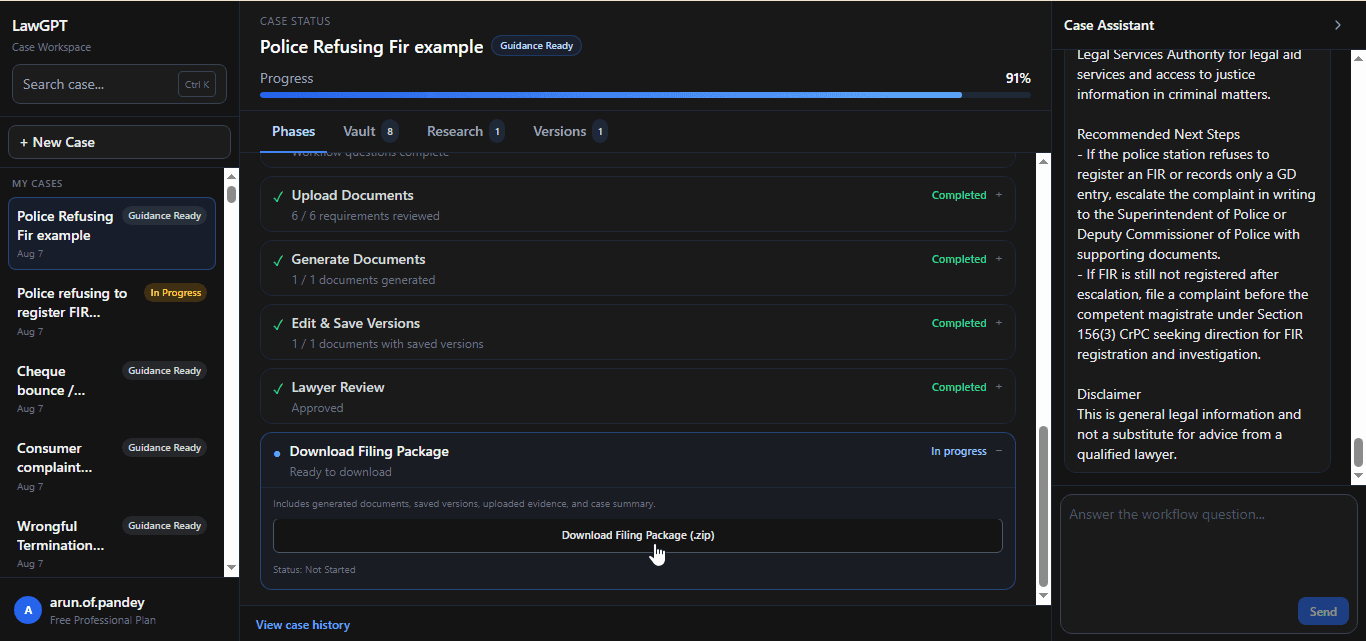
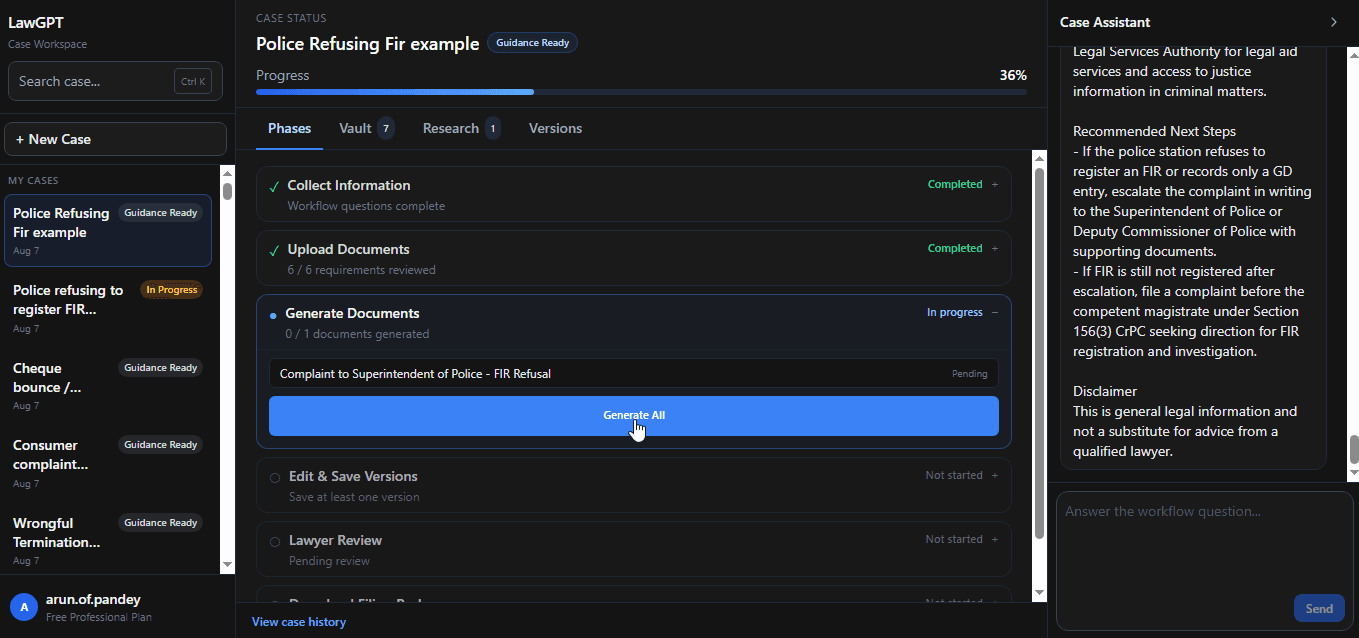
LawGPT can generate a structured draft and annexure index through the Police Refusing FIR workflow. Have an advocate review facts, forum, and urgent-relief wording before relying on it.
Inside the LawGPT workflow
Frequently asked questions
Use only an official address or portal, retain the full submission record, and confirm local practice. Traceable physical delivery may also be useful.